What’s a skill you consider basic, that most people don’t actually know how to do?
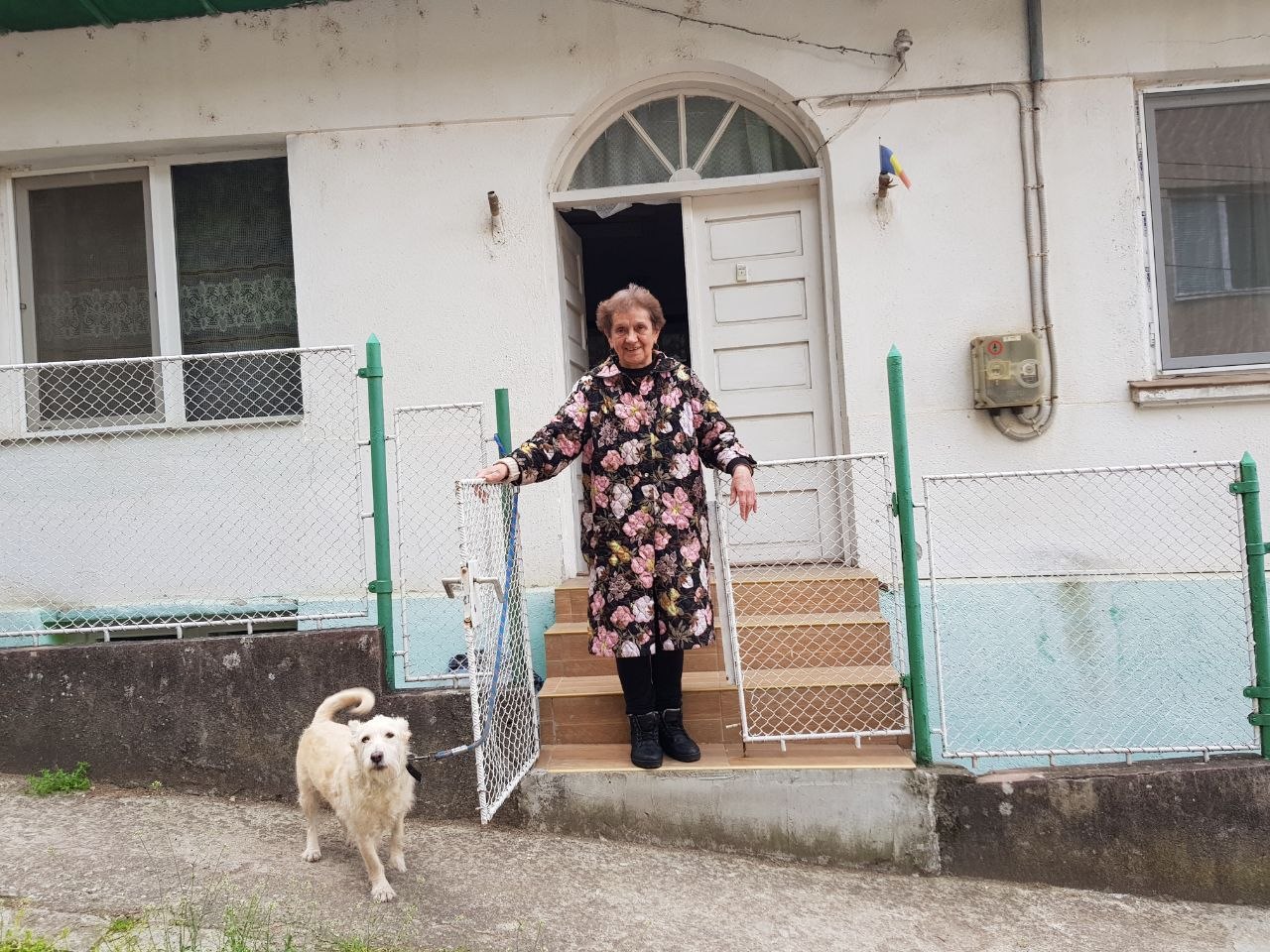
Although everyone has a tendency to recount stories from their own lives and even to gossip about events in the lives of others, not everyone focuses on the art of storytelling, even though it is relatively easy to take up and has the power to bring people together around the storyteller. Back when there was no Internet and televisions were expensive enough that they weren’t found in every room—especially not in government institutions—my grandmother was admitted to the city hospital for a few days to have her tonsils removed. Like any woman from the countryside, she had an extraordinary memory and recalled many life stories, which she recounted with delight to the other three patients in the hospital ward. When I came to visit her, I heard the other women begging her to tell them another story to help pass the time. They didn’t have a TV in the small ward, and their only way to pass the time was to read newspapers or novels—among which *Scarlett* held a special place. Still, the elderly women preferred my grandmother, who told stories with a talent comparable to that of today’s podcasters. Nevertheless, she never made any money from the art of storytelling, but she did make many friends. I wonder what her life would have been like if she had become a professional storyteller or writer, and her audience had been larger than her lounge mates or the old ladies in a train compartment.
RO
Deși toată lumea are înclinația de a povesti întâmplări de viață și chiar de a bârfi evenimente din viețile altora, nu oricine se axează pe arta povestitului, cu toate că aceasta e relativ ușor de abordat și are darul de a-i uni pe oameni în jurul povestitorului. Pe vremea când nu exista Internet și televizoarele erau suficient de scumpe încât să nu se găsească chiar în orice încăpere, mai ales nu în instituțiile de stat, bunica mea a fost internată câteva zile în spitalul orășenesc pentru o extracție de amigdale. Ca orice femeie de la țară, avea o memorie extraordinară și ținea minte multe întâmplări de viață, pe care le povestea cu încântare celorlalte trei paciente din salonul spitalicesc. Venit în vizită la ea, le-am auzit pe colegele ei de suferință rugând-o să le mai povestească ceva ca să le treacă plictiseala. Nu aveau televizor în micul salon și singura lor metodă de a-și petrece timpul era cititul ziarelor sau a unor romane dintre care Scarlett era la loc de cinste. Totuși, bătrânele o preferau pe bunică-mea, care povestea cu un talent comparabil cu cel al realizatorilor de podcasturi din zilele noastre. Cu toate acestea, ea n-a câștigat niciodată bani din arta povestirii, dar și-a făcut multe prietene. Mă întreb ce-ar fi fost viața ei dacă ar fi ajuns povestitor profesionist sau scriitoare, iar publicul ei ar fi fost mai numeros decât colegele de salon sau babele dintr-un compartiment de tren.
What’s a moment in your life that felt like it was straight out of a movie?
I’m going to tell you a story from my life that seems straight out of a movie—but not just any movie, rather one of those films about fools or a comedy with tragic undertones. On July 20, 2023, I was supposed to report to the philharmonic hall in the capital city of the neighboring county to participate in a competition scheduled for 11 a.m. Since I don’t own a car and the only two trains to that destination passed through my town’s station at 1:30 a.m. (the private one) and around 2 a.m. (the state-run one), I had arranged earlier that day with a taxi driver working that night to take me from home to the station, which is located just outside the city. Although the man had initially seemed delighted with the job, when I called him around 12:50 a.m. to come pick me up, he replied in a panic that the storm that had started around 11 p.m. had knocked down some trees on the road and that only the police and firefighters could still get through. The storm had passed, and I had to make it to catch the only train capable of getting me on time to the city where I was scheduled to take the audition the next morning for the competition I’d been shortlisted for. I panicked and yelled at the taxi driver over the phone that he had to keep his word and not stand in the way of my artistic destiny. Eventually, the driver showed up, I stowed my luggage and guitar in the trunk, and we headed for the station. True, tree branches had fallen across certain sections of the two-lane road, but at least one lane was passable, and even though the driver had driven into oncoming traffic a few times to avoid obstacles on the road, there were no cars coming from the opposite direction at that late hour anyway. Apart from a few old branches and some boulders that had fallen onto the asphalt along the stretch of road running alongside the forest, as well as a tall fir tree whose crown had snapped and fallen across the roof of the high school building, I couldn’t spot any other serious damage from the taxi windows. Consequently, I concluded that the taxi driver had exaggerated the storm’s effects, and I resumed optimistically looking forward to the train ride and the success at the music competition that awaited me that day.
When I arrived at the station around 1:20 a.m., the building and the platform were plunged into darkness—but not the stationmaster’s office, which was lit up. The taxi driver, whom I had paid for the ride and a generous tip, offered to wait for me while I spoke with the stationmaster and to take me back home in case the trains were canceled due to the storm. Unfortunately, I made the thoughtless mistake of sending the driver back into town. The stationmaster had informed me that the trains were indeed stuck somewhere along the route, due to fallen trees blocking the tracks and power lines, but he assured me that they would be cleared within a few hours. Since it was only 2 a.m. and I had to reach my destination by 11 a.m., I believed the man’s lies and took a seat in the waiting room, in the dark. There were a couple of homeless people sprawled out on the benches, sleeping with a beer by their heads and snoring with gasps. With the hall’s excellent acoustics and the pitch-black darkness, I felt like the heroes of the Brothers Grimm stories who had to face the ghost in the haunted bell tower. I couldn’t close my eyes for at least two hours, even though I was tired, yet also excited on the other hand. Around 4 a.m., I noticed the shadows of an unusual light on the walls: across the street from the train station, a roadside restaurant had caught fire. The first to arrive were the owners, who pulled two fire extinguishers from the trunk of a small car and tried to spray them over the flames inside the restaurant, which remained undeterred.
About 10 minutes later, the first local fire truck arrived. The flames had already engulfed the dining hall and were threatening to spread to the residential building in the back. The firefighters sprayed as much water as they had in the truck, then called for a second local fire truck. But that was pretty much the entire firefighting force assigned to the small town where I was. There was a moment when both fire trucks were idle, while the firefighters frantically searched for something around the building. Either they couldn’t find a single working fire hydrant, or they were trying to draw water from the river on whose bank the burning building stood—I couldn’t tell from the train station platform. The fire finished consuming the dining hall of the roadside rest stop, then spread to a two-story hotel-style building with an attic, fortunately unoccupied at the time. Meanwhile, the local fire trucks had headed back into town—probably to refill their empty tanks—while several fire engines brought in by firefighters from neighboring towns appeared on the national highway running parallel to the railroad tracks. I had the impression that the entire eastern part of the county had sent its troops to help my town. Finally, the fire that had broken out under cover of darkness was extinguished as dawn was breaking. Nothing could be saved from the two buildings, except for the walls of the one in the back; the flames had consumed them all the way to the roof. On the side of the road, people were talking loudly and filming with their cell phones. But no one was offering any help, except for the firefighters who had come to the scene.
Although power had been restored almost as soon as the outage began, there was no GSM signal. I couldn’t even call my relatives at home or my favorite taxi driver, let alone go online to check the status of trains stuck on the tracks or the bus schedule as an alternative. Since it was now daylight, the station manager, who had been lying to me every hour that he had received information about the imminent release of the train stuck on the tracks, was replaced by another employee, who was starting his day shift and claimed, just like his predecessor, that “the national train is now being cleared to depart from the station in our county seat.” For it was indeed a national train, so that not all the passengers on it were traveling from the county where the accident occurred to the neighboring county; some of them were coming from the farthest western county and needed to reach the country’s capital.
As time was running out and I was already afraid I wouldn’t reach my destination by train before 11 a.m., around 7 a.m. I made a sign out of an A4 sheet of paper on which I clearly wrote the name of the city I needed to reach, and I went out to the road near the station to flag down cars heading in the right direction. Either all the drivers that morning were only heading to neighboring towns, or their cars were full, or they were afraid of men—even guitarists. The fact is, no one stopped to give me a ride.
When the long-awaited train finally pulled into the station around 9:28 a.m., I gave the locomotive engineer, who was honking triumphantly, the middle finger. I knew the trip to the station I was heading to would take 3 hours—that was under ideal road conditions, which I couldn’t be sure of for the rest of the route, especially after the stormy night that had forced me to spend nearly as much time at the station as a railway employee’s shift, and the passengers on the train were likely to be trapped for an entire night in cars most likely without electricity. I had no guarantee that, by boarding a train at 9:28 a.m. that would take at least 3 hours to reach my destination station, I could even hope to arrive in time for the end of the competition I was supposed to attend at 11 a.m. On the other hand, I was too tired to feel like traveling anymore, nor did I want to give money to a railway company that had robbed me of all my sleep from the previous night. Out of spite, I didn’t even call the taxi driver; instead, since it was already daytime, I boarded the first bus operated by the local city hall.
When I got home, I was astonished to notice on the religious calendar hanging on the wall in the hallway that it was actually the day on which Orthodox Christians celebrate Saint Elijah. This saint is considered the patron of lightning. Tradition says that it must rain on Saint Elijah’s Day, and farmers must not go out to work in the fields because they risk being struck by lightning. I could not find any religious prohibition regarding railway workers for that day, but my faith tells me that there should be both a prohibition and a penalty for violating it.
If you’re wondering what happened to the contest I was supposed to enter, I can tell you that I won first place in the contest held the following year. If a 3-hour trip can take an entire night, why shouldn’t winning a contest take a whole year? After all, we live in Romania, a member state of the European Union, in the 21st century, and time flies awquardly these days.
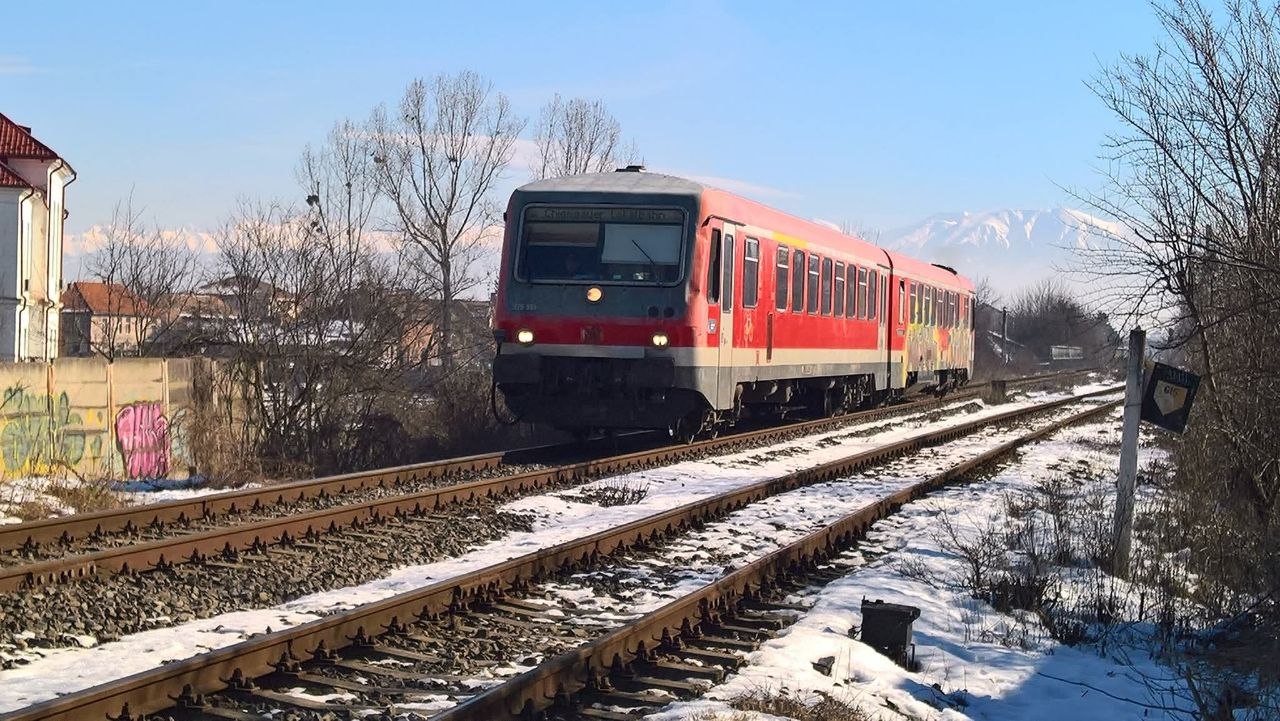
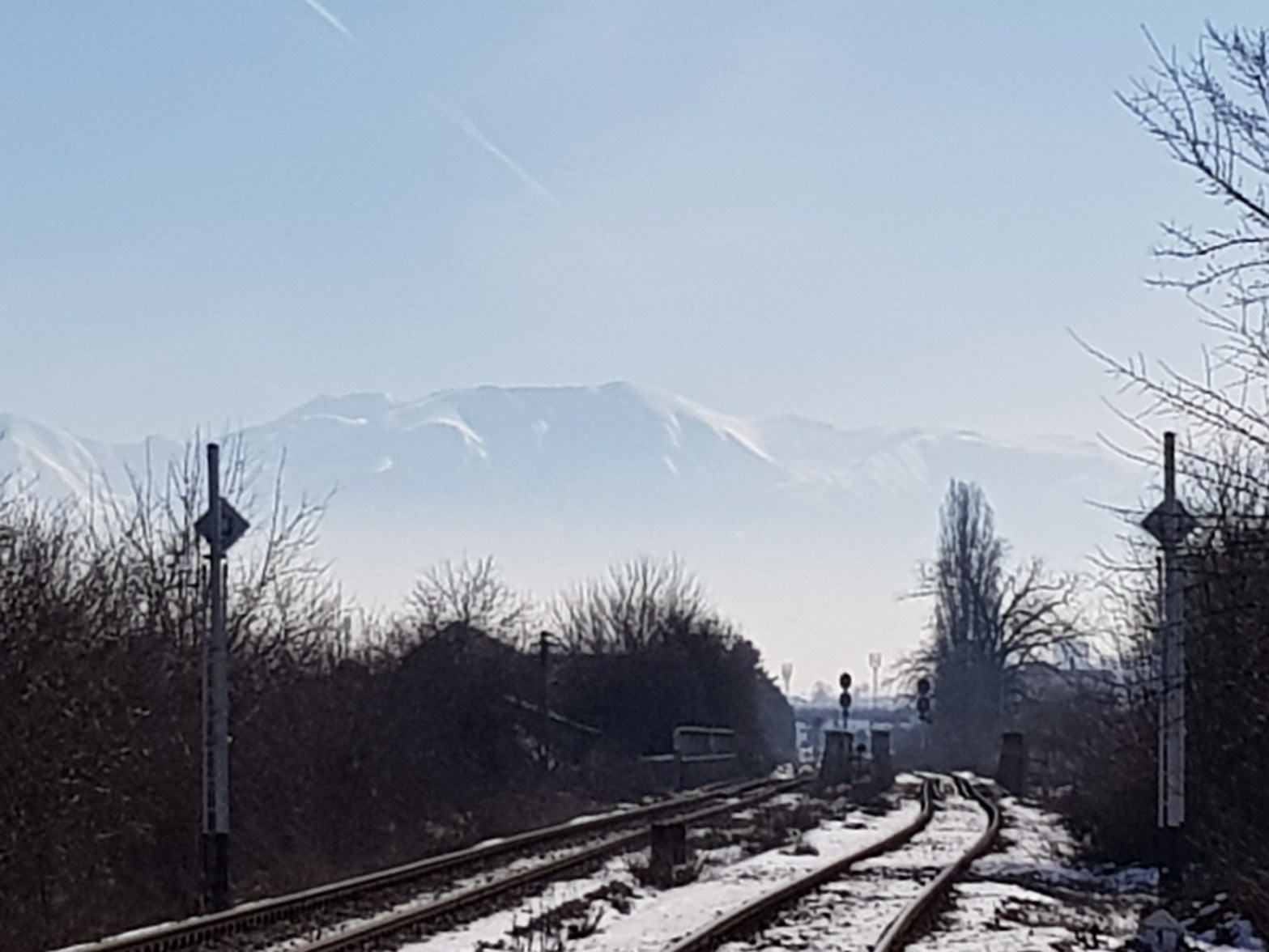
Let’s start this blog with an invitation to a journey in Transylvania, the heart of Romania. You have to take your time, because in this region the lack of speed is characteristic for all things, from people who peacefully ride their bikes to trains who take 3 – 4 hours in order to arrive from one big city to another. Meanwhile, you have plenty of time to admire the landscape, which is composed mainly of hills and mountains, covered by ancient woods. Because ‘Transylvania’ in latin means ‘the country beyond the woods’ (forests). It’s still winter time this part of the year, so feel free to enjoy the snow and gaze at the white colour of the Carpathian Mountains, while drinking some hot ‘palinka’ in order to warm up your soul!