Lyrics about War in Bob Dylan’s Blowing in the Wind

What’s a song lyric that has stuck with you forever?

„Yes, and how many times must the cannonballs fly
Before they’re forever banned? (…)
Yes, and how many ears must one man have
Before he can hear people cry?
Yes, and how many deaths will it take ‘til he knows
That too many people have died?”

(Blowing in the WindBob Dylan)

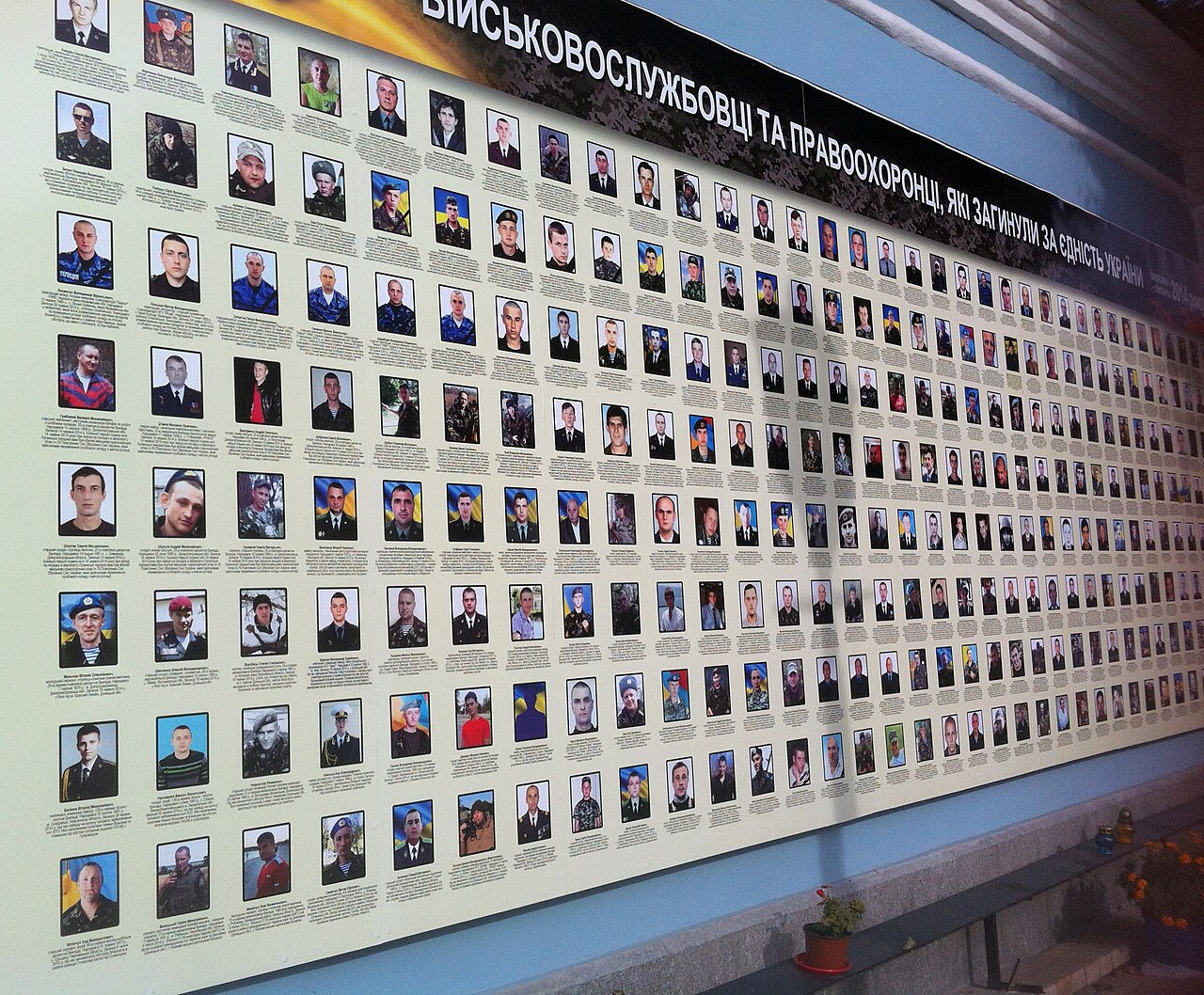
I have always been moved by the lyrics of this song, which denounce the horrors of World War II or the Vietnam War—in fact, of any war. Beyond ideological justifications, moral precepts, and the notion of justice invoked by one or both sides, the tangible result of war is the destruction of cities, countries, and the natural environment—and, last but not least, the loss of a considerable number of human lives. Although it was believed that in the 21st century there would be no more wars—at most, economic wars—or that the world would be governed by a super-intelligent artificial intelligence capable of peacefully managing humanity’s development, the war in Ukraine and those in the Middle East have convinced us that we have not evolved at all since the last world war, or that, although we have evolved, we have not learned the most important lesson—namely, that a “unfair” peace  is preferable to a “just” war, if the price is—and will be—the loss of human lives and the pushing of civilization back toward barbarism.

Back when I first became acquainted with this Bob Dylan song, in the 1990s, there was peace in the world and the Cold War had just ended, along with the threat of the planet’s nuclear annihilation.  The lyrics to “Blowing in the Wind” first reached my ears in Florian Pittiș‘s Romanian translation, on cassettes by the band Pasărea Colibri (the hummingbird). I loved them from the very first time I heard them and hummed them long before I discovered the original version.

Now, 35 years later, living in Romania—the Eastern European country closest to Ukraine and to the war currently raging on its territory between the two Slavic peoples—I can only look “over the fence” and realize just how right Bob Dylan was: destruction on both sides of the conflict, devastated cities, and hundreds of thousands of dead men, leaving behind widows and orphaned children. And yet, after four years of conflict and a situation that has grown increasingly unfavorable compared to the few moments when peace could have been negotiated, everyone is talking about nothing but more war. Can fire be extinguished with even more fire? Is that really what we want? “How many times must the cannonballs fly /
Before they’re forever banned? (…) / Yes, and how many deaths will it take ‘til he knows
That too many people have died?”

The answer is probably blowing in the wind…

RO

„Câte bombe vor mai sfârteca vieți întregi,
Pân’ să le interzicem pe veci? (…)

Câți mai au de murit ca s-aflăm în sfârșit
Că oameni prea mulți au murit?”

(Vânare de Vânt, traducere după Bob Dylan de Florian Pittiș)

Dintotdeauna m-au impresionat versurile acestui cântec denunțând ororile celui de-Al Doilea Război Mondial sau ale Războiului din Vietnam – de fapt, ale oricărui război. Dincolo de rațiunile ideologice, preceptele morale și noțiunea de dreptate invocată de una dintre tabere sau de ambele, rezultatul palpabil al unui război e distrugerea orașelor, țărilor, mediului natural și, nu în ultimul rând, pierderea unui număr considerabil de vieți omenești. Deși se credea că în secolul al XXI-lea nu vor mai exista războaie, decât cel mult războaie economice, sau că lumea va fi condusă de o super-inteligență artificială capabilă să gestioneze pașnic dezvoltarea umanității, războiul din Ucraina și cele din Orientul Mijlociu ne-au convins că n-am evoluat mai deloc de la ultima conflagrație mondială încoace sau că, deși am evoluat, nu ne-am însușit lecția cea mai importantă, anume că o pace „strâmbă”  e preferabilă unui război „drept”, dacă prețul este și va fi pierderea de vieți omenești și împingerea civilizației înapoi spre barbarie.

Pe vremea când am făcut cunoștință prima dată cu acest cântec al lui Bob Dylan, în anii 1990, era pace în lume și tocmai se terminase Războiul Rece, implicit amenințarea cu extincția nucleară a planetei. Versurile piesei „Blowing in the wind” au ajuns prima dată la urechile mele în traducerea românească a lui Florian Pittiș, pe casetele formației Pasărea Colibri. Le-am iubit de prima dată și le-am fredonat cu mult timp înainte de a afla varianta originală.

Acum, 35 de ani mai târziu, trăind în România, țara est-europeană cea mai apropiată de Ucraina și de războiul aflat în desfășurare pe teritoriul ei între cele două popoare slave, nu pot decât să mă uit „dincolo de gard” și să remarc cât de multă dreptate a avut Bob Dylan: distrugeri în ambele tabere beligerante, orașe devastate și sute de mii de bărbați morți, lăsând în urmă văduve și copii orfani. Cu toate astea, după 4 ani de conflict și o situație din ce în ce mai defavorabilă față de cele câteva momente în care s-ar fi putut negocia pacea, toată lumea nu vorbește decât despre și mai mult război. Oare focul poate fi stins cu și mai mult foc? Oare asta ne dorim cu adevărat? „Câte bombe vor mai sfârteca vieți întregi / Pân-să le interzicem pe veci? (…) / Câți mai au de murit / Ca s-aflăm în sfârșit / Că oameni prea mulți au murit?”

Răspunsul, probabil, e vânare de vânt…
The night train that arrived the next day

What’s a moment in your life that felt like it was straight out of a movie?

I’m going to tell you a story from my life that seems straight out of a movie—but not just any movie, rather one of those films about fools or a comedy with tragic undertones. On July 20, 2023, I was supposed to report to the philharmonic hall in the capital city of the neighboring county to participate in a competition scheduled for 11 a.m. Since I don’t own a car and the only two trains to that destination passed through my town’s station at 1:30 a.m. (the private one) and around 2 a.m. (the state-run one), I had arranged earlier that day with a taxi driver working that night to take me from home to the station, which is located just outside the city. Although the man had initially seemed delighted with the job, when I called him around 12:50 a.m. to come pick me up, he replied in a panic that the storm that had started around 11 p.m. had knocked down some trees on the road and that only the police and firefighters could still get through. The storm had passed, and I had to make it to catch the only train capable of getting me on time to the city where I was scheduled to take the audition the next morning for the competition I’d been shortlisted for. I panicked and yelled at the taxi driver over the phone that he had to keep his word and not stand in the way of my artistic destiny. Eventually, the driver showed up, I stowed my luggage and guitar in the trunk, and we headed for the station. True, tree branches had fallen across certain sections of the two-lane road, but at least one lane was passable, and even though the driver had driven into oncoming traffic a few times to avoid obstacles on the road, there were no cars coming from the opposite direction at that late hour anyway. Apart from a few old branches and some boulders that had fallen onto the asphalt along the stretch of road running alongside the forest, as well as a tall fir tree whose crown had snapped and fallen across the roof of the high school building, I couldn’t spot any other serious damage from the taxi windows. Consequently, I concluded that the taxi driver had exaggerated the storm’s effects, and I resumed optimistically looking forward to the train ride and the success at the music competition that awaited me that day.

When I arrived at the station around 1:20 a.m., the building and the platform were plunged into darkness—but not the stationmaster’s office, which was lit up. The taxi driver, whom I had paid for the ride and a generous tip, offered to wait for me while I spoke with the stationmaster and to take me back home in case the trains were canceled due to the storm. Unfortunately, I made the thoughtless mistake of sending the driver back into town. The stationmaster had informed me that the trains were indeed stuck somewhere along the route, due to fallen trees blocking the tracks and power lines, but he assured me that they would be cleared within a few hours. Since it was only 2 a.m. and I had to reach my destination by 11 a.m., I believed the man’s lies and took a seat in the waiting room, in the dark. There were a couple of homeless people sprawled out on the benches, sleeping with a beer by their heads and snoring with gasps. With the hall’s excellent acoustics and the pitch-black darkness, I felt like the heroes of the Brothers Grimm stories who had to face the ghost in the haunted bell tower. I couldn’t close my eyes for at least two hours, even though I was tired, yet also excited on the other hand. Around 4 a.m., I noticed the shadows of an unusual light on the walls: across the street from the train station, a roadside restaurant had caught fire. The first to arrive were the owners, who pulled two fire extinguishers from the trunk of a small car and tried to spray them over the flames inside the restaurant, which remained undeterred.

About 10 minutes later, the first local fire truck arrived. The flames had already engulfed the dining hall and were threatening to spread to the residential building in the back. The firefighters sprayed as much water as they had in the truck, then called for a second local fire truck. But that was pretty much the entire firefighting force assigned to the small town where I was. There was a moment when both fire trucks were idle, while the firefighters frantically searched for something around the building. Either they couldn’t find a single working fire hydrant, or they were trying to draw water from the river on whose bank the burning building stood—I couldn’t tell from the train station platform. The fire finished consuming the dining hall of the roadside rest stop, then spread to a two-story hotel-style building with an attic, fortunately unoccupied at the time. Meanwhile, the local fire trucks had headed back into town—probably to refill their empty tanks—while several fire engines brought in by firefighters from neighboring towns appeared on the national highway running parallel to the railroad tracks. I had the impression that the entire eastern part of the county had sent its troops to help my town. Finally, the fire that had broken out under cover of darkness was extinguished as dawn was breaking. Nothing could be saved from the two buildings, except for the walls of the one in the back; the flames had consumed them all the way to the roof. On the side of the road, people were talking loudly and filming with their cell phones. But no one was offering any help, except for the firefighters who had come to the scene.

Although power had been restored almost as soon as the outage began, there was no GSM signal. I couldn’t even call my relatives at home or my favorite taxi driver, let alone go online to check the status of trains stuck on the tracks or the bus schedule as an alternative.
Since it was now daylight, the station manager, who had been lying to me every hour that he had received information about the imminent release of the train stuck on the tracks, was replaced by another employee, who was starting his day shift and claimed, just like his predecessor, that “the national train is now being cleared to depart from the station in our county seat.” For it was indeed a national train, so that not all the passengers on it were traveling from the county where the accident occurred to the neighboring county; some of them were coming from the farthest western county and needed to reach the country’s capital.

As time was running out and I was already afraid I wouldn’t reach my destination by train before 11 a.m., around 7 a.m. I made a sign out of an A4 sheet of paper on which I clearly wrote the name of the city I needed to reach, and I went out to the road near the station to flag down cars heading in the right direction. Either all the drivers that morning were only heading to neighboring towns, or their cars were full, or they were afraid of men—even guitarists. The fact is, no one stopped to give me a ride.

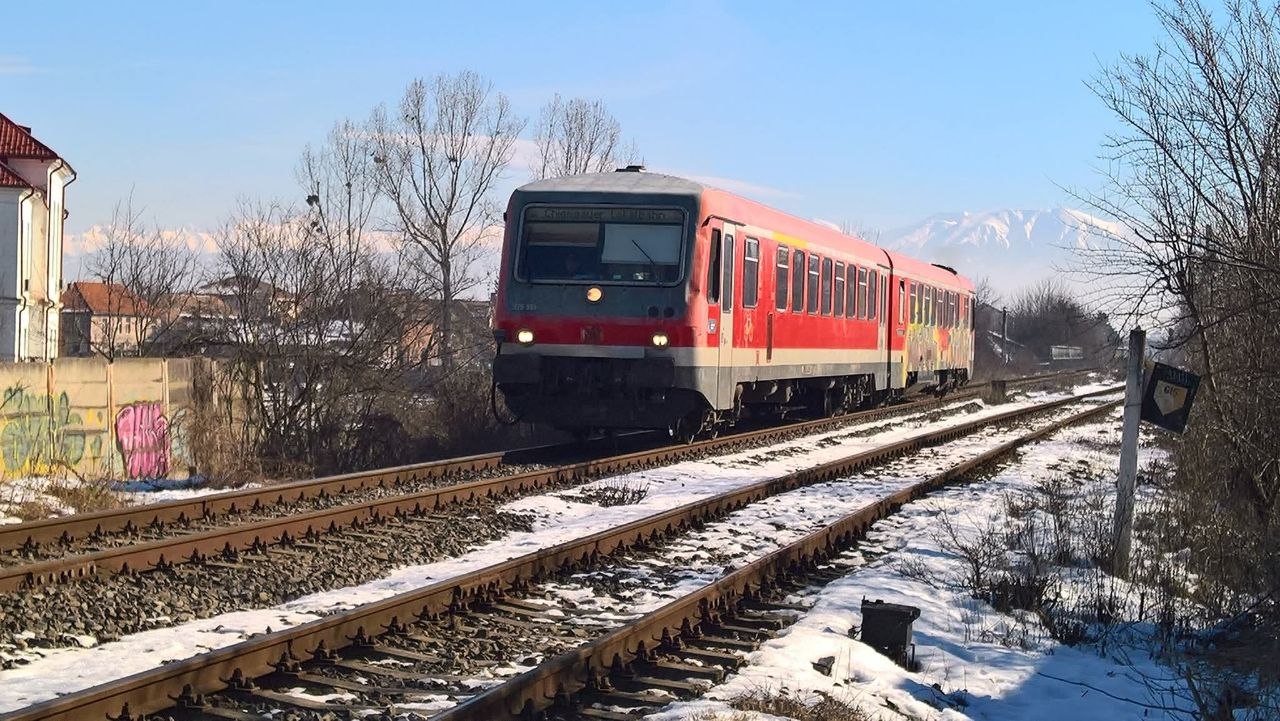
When the long-awaited train finally pulled into the station around 9:28 a.m., I gave the locomotive engineer, who was honking triumphantly, the middle finger. I knew the trip to the station I was heading to would take 3 hours—that was under ideal road conditions, which I couldn’t be sure of for the rest of the route, especially after the stormy night that had forced me to spend nearly as much time at the station as a railway employee’s shift, and the passengers on the train were likely to be trapped for an entire night in cars most likely without electricity. I had no guarantee that, by boarding a train at 9:28 a.m. that would take at least 3 hours to reach my destination station, I could even hope to arrive in time for the end of the competition I was supposed to attend at 11 a.m. On the other hand, I was too tired to feel like traveling anymore, nor did I want to give money to a railway company that had robbed me of all my sleep from the previous night. Out of spite, I didn’t even call the taxi driver; instead, since it was already daytime, I boarded the first bus operated by the local city hall.

When I got home, I was astonished to notice on the religious calendar hanging on the wall in the hallway that it was actually the day on which Orthodox Christians celebrate Saint Elijah. This saint is considered the patron of lightning. Tradition says that it must rain on Saint Elijah’s Day, and farmers must not go out to work in the fields because they risk being struck by lightning. I could not find any religious prohibition regarding railway workers for that day, but my faith tells me that there should be both a prohibition and a penalty for violating it.

If you’re wondering what happened to the contest I was supposed to enter, I can tell you that I won first place in the contest held the following year. If a 3-hour trip can take an entire night, why shouldn’t winning a contest take a whole year? After all, we live in Romania, a member state of the European Union, in the 21st century, and time flies awquardly these days.