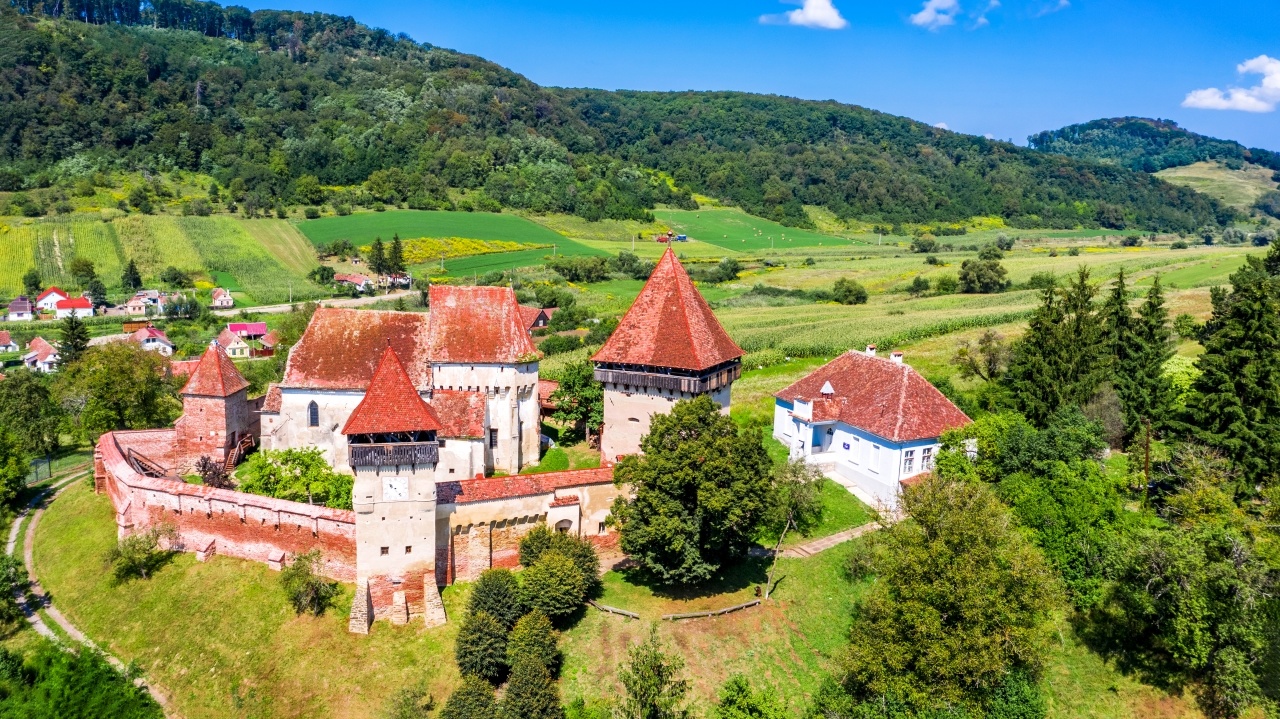
Mediaș for its historic buildings, traditional wines and folk music festival.
Alba Iulia for its magnificent citadel, imposing cathedrals and national ceremonies.
Cluj-Napoca for its cultural life, historic buildings, renowned university, and the haunted ‘Baciu’ forest.
Craiova for the Romanescu Park, the historic center, the old churches, and the friendliest train station in Romania. During the summer, you can attend the ‘Adrian Păunescu‘ Folk & Poetry Festival, and during the winter, the most beautiful and open-air Christmas market in Romania.
Bucharest for its nightlife, theatres, the Old Town, the People’s Palace (the Parliament building), the National Cathedral, the Romanian Athenaeum, the University and the nearby statues, the ‘Bellu’ cemetery and the ‘urban delta.’
This is a subjective and non-exhaustive list; the tourist destinations are not listed in order of importance or prestige. It would be best to read a little about each city or region and decide for yourself which ones you find most appealing.
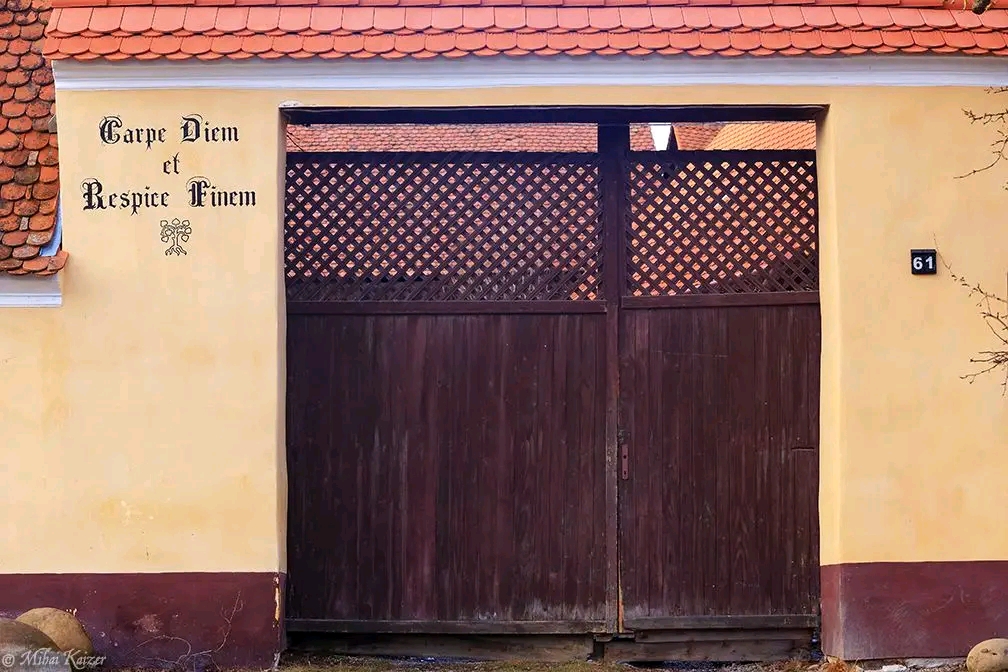
| Words written on a gate of a house built in Viscri (Brașov, Transylvania, România) by Michael Fernolend in 1840 and renovated in 2014 by Dietmar Gross, as an incription on the facade says. The words represent two different sayings taken from different (con)texts: the well-known „Carpe Diem” taken from the Roman poet Horace’s work „Odes” I, 11, 8 (23 BC): „Carpe diem, quam minimum credula postero” (~ „Seize the day and trust, as little as you may, in tomorrow”) and „Respice finem” that apparently appears in the 103th chapter of „Gesta Romanorum” [a collection of anecdotes and tales, compiled in Latin, probably by a priest – at the end of 13th century, beginning of 14th century, first two editions published around 1440 and the third edition, probably based directly on Harleian manuscript 5369 (British Museum), was published by Wynkyn de Worde in 1524. The collection became so popular throughout Western Europe that copies were multiplied, often with local additions, so that now it isn’t possible to determine whether it was originally written in England, Germany, or France.]: „Quidquid agas, prudenter agas, et respice finem” [~ „Whatever you do, do cautiously, and look to the end ((/consider that everything has an end or/and consider the end result of your action))”].||
RO
|| Cuvinte scrise pe poarta unei case construite în Viscri (Brașov, Transilvania, România) de Michael Fernolend în 1840 și renovată în 2014 de Dietmar Gross, așa cum spune o inscripție de pe fațadă. Cuvintele reprezintă două expresii luate din două (con)texte diferite: bine- cunoscutul ”Carpe Diem” ce apare în opera poetului roman Horațiu ”Ode” I, 11, 8 (23 Î.Hr): „Carpe diem, quam minimum credula postero” [~ „Trăiește clipa și încrede-te cât se poate de puțin în ziua de mâine”] și ”Respice Finem” ce apare în capitolul 103 din ”Gesta Romanorum” [o culegere de anecdote și povestiri, scrise în limba latină, cel mai probabil de către un preot către sfârșitul secolului al XIII-lea, începutul secolului al XIV-lea, primele două ediții apărând în jurul anului 1440 și cea de-a treia, bazată cel mai probabil pe manuscrisul Harleian 5369 (aflat în Colecția British Museum), fiind publicată de Wynkyn de Worde in 1524. Colecția a devenit atât de populară în Europa Occidentală încât s-au răspândit multe copii, adesea cu adăugiri locale, încât acum este imposibil de determinat dacă aceasta a fost scrisă prima dată în Anglia, Germania sau Franța]: ”Quidquid agas, prudenter agas, et respice finem” [~ ”Orice ai face, trebuie să faci acest lucru cu precauție, privind către sfârșit (/considerând că totul are un sfârșit sau/și luând în considerare consecințele acțiunilor tale)”].|
If you could rewrite any book’s ending, which one would you choose?
I read The Novel of the Nearsighted Teenager and Gaudeamus by Mircea Eliade when I was in high school. While in the novel, the author of A History of Religions chronicles his high school life in a diary, recounting incidents related to his school subjects, failing grades, his list of extracurricular reading, and his daily schedule (he read so much that he ended up sleeping only 4 hours out of every 24), in Gaudeamus—as far as I recall – Eliade describes his life as a college student in the Kingdom of Romania during the interwar period.
His intellectual life is interspersed with scenes from his social and romantic life. Although he loved Nișka, a student from Bessarabia (present-day Republic of Moldova, then an eastern province of Romania), the nearsighted young man breaks up with this exceptional girl because he wanted an austere life as an encyclopedic intellectual and believed that this path would be incompatible with family life.
At the age of 16, when I read Gaudeamus, such an unhappy ending tore my heart apart. I took the Rotring mechanical pencil I used to do my math homework and, right on the very last page of the book, in the blank space after “THE END,” I rewrote the ending so that the protagonist would stay together with his girlfriend, Nișka.
I admit that I was a bit presumptuous in correcting the great Eliade, but at least I did justice to the female character in the second part of the novel about the nearsighted young man’s youth.
RO
Am citit „Romanul adolescentului miop” și „Gaudeamus” de Mircea Eliade pe când eram licean. Dacă, în roman, autorul „Tratatului de Istorie a Religiilor” își notează jurnalul vieții lui de licean, cu întâmplări legate de materiile de studiu, corigențe, lista de lecturi extrașcolare și programul lui zilnic (citea atât de mult încât ajunsese să doarmă doar 4 ore din 24), în „Gaudeamus” – pe cât îmi amintesc – Eliade își descrie viața de student la o facultate din Regatul României din perioada interbelică.
Viața lui intelectuală e presărată cu scene ale vieții sociale și amoroase. Cu toate că o iubea pe Nișka, o studentă venită din Basarabia (actuala Republică Moldova, pe atunci provincie estică a României), tânărul miop se desparte de această fată excepțională din cauză că el își dorea o viață austeră de intelectual enciclopedic și considera că acest parcurs ar fi incompatibil cu viața de familie.
La vârsta de 16 ani, când am citit Gaudeamus, un astfel de „unhappy end” mi-a sfâșiat inima. Am luat creionul mecanic Rotring cu care îmi făceam temele la matematică și, chiar pe ultima pagină a cărții, în spațiul alb de după SFÂRȘIT, am rescris finalul astfel încât protagonistul să rămână împreună cu iubita lui, Nișka.
Recunosc că am comis o aroganță corectându-l pe marele Eliade, dar cel puțin i-am făcut dreptate personajului feminin din a doua parte a romanului tinereții miopului.
What’s a moment in your life that felt like it was straight out of a movie?
I’m going to tell you a story from my life that seems straight out of a movie—but not just any movie, rather one of those films about fools or a comedy with tragic undertones. On July 20, 2023, I was supposed to report to the philharmonic hall in the capital city of the neighboring county to participate in a competition scheduled for 11 a.m. Since I don’t own a car and the only two trains to that destination passed through my town’s station at 1:30 a.m. (the private one) and around 2 a.m. (the state-run one), I had arranged earlier that day with a taxi driver working that night to take me from home to the station, which is located just outside the city. Although the man had initially seemed delighted with the job, when I called him around 12:50 a.m. to come pick me up, he replied in a panic that the storm that had started around 11 p.m. had knocked down some trees on the road and that only the police and firefighters could still get through. The storm had passed, and I had to make it to catch the only train capable of getting me on time to the city where I was scheduled to take the audition the next morning for the competition I’d been shortlisted for. I panicked and yelled at the taxi driver over the phone that he had to keep his word and not stand in the way of my artistic destiny. Eventually, the driver showed up, I stowed my luggage and guitar in the trunk, and we headed for the station. True, tree branches had fallen across certain sections of the two-lane road, but at least one lane was passable, and even though the driver had driven into oncoming traffic a few times to avoid obstacles on the road, there were no cars coming from the opposite direction at that late hour anyway. Apart from a few old branches and some boulders that had fallen onto the asphalt along the stretch of road running alongside the forest, as well as a tall fir tree whose crown had snapped and fallen across the roof of the high school building, I couldn’t spot any other serious damage from the taxi windows. Consequently, I concluded that the taxi driver had exaggerated the storm’s effects, and I resumed optimistically looking forward to the train ride and the success at the music competition that awaited me that day.
When I arrived at the station around 1:20 a.m., the building and the platform were plunged into darkness—but not the stationmaster’s office, which was lit up. The taxi driver, whom I had paid for the ride and a generous tip, offered to wait for me while I spoke with the stationmaster and to take me back home in case the trains were canceled due to the storm. Unfortunately, I made the thoughtless mistake of sending the driver back into town. The stationmaster had informed me that the trains were indeed stuck somewhere along the route, due to fallen trees blocking the tracks and power lines, but he assured me that they would be cleared within a few hours. Since it was only 2 a.m. and I had to reach my destination by 11 a.m., I believed the man’s lies and took a seat in the waiting room, in the dark. There were a couple of homeless people sprawled out on the benches, sleeping with a beer by their heads and snoring with gasps. With the hall’s excellent acoustics and the pitch-black darkness, I felt like the heroes of the Brothers Grimm stories who had to face the ghost in the haunted bell tower. I couldn’t close my eyes for at least two hours, even though I was tired, yet also excited on the other hand. Around 4 a.m., I noticed the shadows of an unusual light on the walls: across the street from the train station, a roadside restaurant had caught fire. The first to arrive were the owners, who pulled two fire extinguishers from the trunk of a small car and tried to spray them over the flames inside the restaurant, which remained undeterred.
About 10 minutes later, the first local fire truck arrived. The flames had already engulfed the dining hall and were threatening to spread to the residential building in the back. The firefighters sprayed as much water as they had in the truck, then called for a second local fire truck. But that was pretty much the entire firefighting force assigned to the small town where I was. There was a moment when both fire trucks were idle, while the firefighters frantically searched for something around the building. Either they couldn’t find a single working fire hydrant, or they were trying to draw water from the river on whose bank the burning building stood—I couldn’t tell from the train station platform. The fire finished consuming the dining hall of the roadside rest stop, then spread to a two-story hotel-style building with an attic, fortunately unoccupied at the time. Meanwhile, the local fire trucks had headed back into town—probably to refill their empty tanks—while several fire engines brought in by firefighters from neighboring towns appeared on the national highway running parallel to the railroad tracks. I had the impression that the entire eastern part of the county had sent its troops to help my town. Finally, the fire that had broken out under cover of darkness was extinguished as dawn was breaking. Nothing could be saved from the two buildings, except for the walls of the one in the back; the flames had consumed them all the way to the roof. On the side of the road, people were talking loudly and filming with their cell phones. But no one was offering any help, except for the firefighters who had come to the scene.
Although power had been restored almost as soon as the outage began, there was no GSM signal. I couldn’t even call my relatives at home or my favorite taxi driver, let alone go online to check the status of trains stuck on the tracks or the bus schedule as an alternative. Since it was now daylight, the station manager, who had been lying to me every hour that he had received information about the imminent release of the train stuck on the tracks, was replaced by another employee, who was starting his day shift and claimed, just like his predecessor, that “the national train is now being cleared to depart from the station in our county seat.” For it was indeed a national train, so that not all the passengers on it were traveling from the county where the accident occurred to the neighboring county; some of them were coming from the farthest western county and needed to reach the country’s capital.
As time was running out and I was already afraid I wouldn’t reach my destination by train before 11 a.m., around 7 a.m. I made a sign out of an A4 sheet of paper on which I clearly wrote the name of the city I needed to reach, and I went out to the road near the station to flag down cars heading in the right direction. Either all the drivers that morning were only heading to neighboring towns, or their cars were full, or they were afraid of men—even guitarists. The fact is, no one stopped to give me a ride.
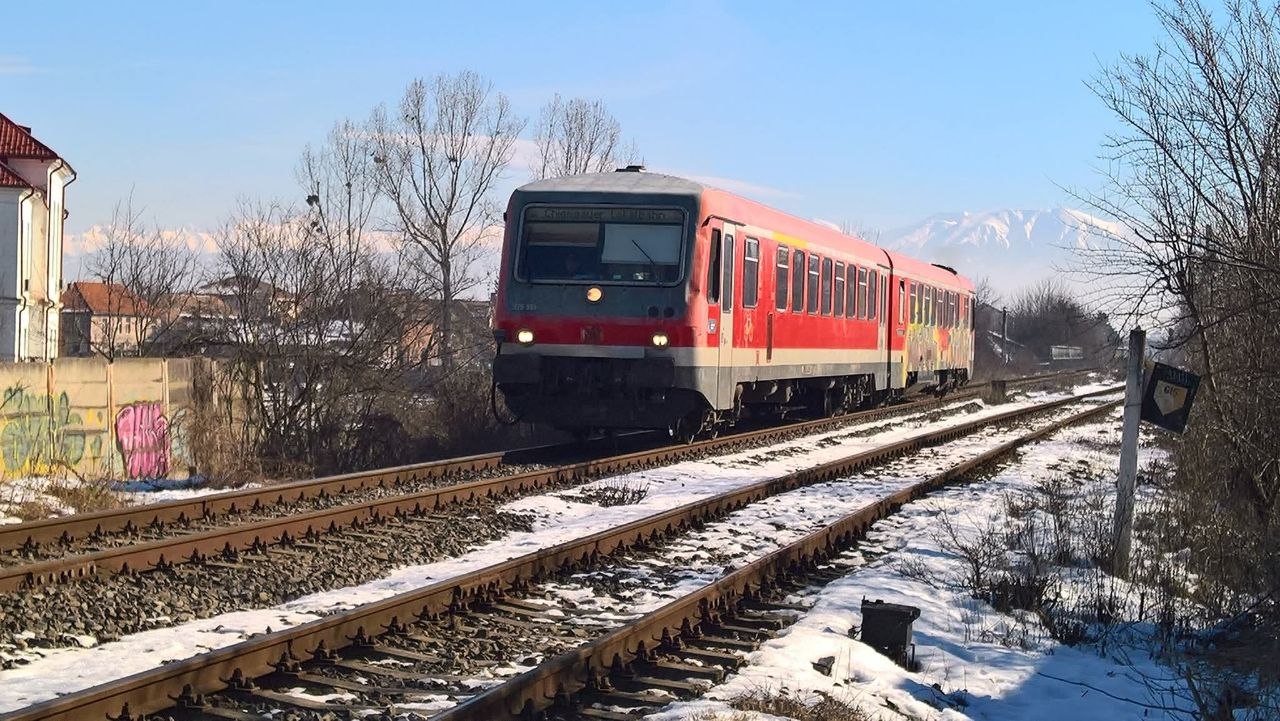
When the long-awaited train finally pulled into the station around 9:28 a.m., I gave the locomotive engineer, who was honking triumphantly, the middle finger. I knew the trip to the station I was heading to would take 3 hours—that was under ideal road conditions, which I couldn’t be sure of for the rest of the route, especially after the stormy night that had forced me to spend nearly as much time at the station as a railway employee’s shift, and the passengers on the train were likely to be trapped for an entire night in cars most likely without electricity. I had no guarantee that, by boarding a train at 9:28 a.m. that would take at least 3 hours to reach my destination station, I could even hope to arrive in time for the end of the competition I was supposed to attend at 11 a.m. On the other hand, I was too tired to feel like traveling anymore, nor did I want to give money to a railway company that had robbed me of all my sleep from the previous night. Out of spite, I didn’t even call the taxi driver; instead, since it was already daytime, I boarded the first bus operated by the local city hall.
When I got home, I was astonished to notice on the religious calendar hanging on the wall in the hallway that it was actually the day on which Orthodox Christians celebrate Saint Elijah. This saint is considered the patron of lightning. Tradition says that it must rain on Saint Elijah’s Day, and farmers must not go out to work in the fields because they risk being struck by lightning. I could not find any religious prohibition regarding railway workers for that day, but my faith tells me that there should be both a prohibition and a penalty for violating it.
If you’re wondering what happened to the contest I was supposed to enter, I can tell you that I won first place in the contest held the following year. If a 3-hour trip can take an entire night, why shouldn’t winning a contest take a whole year? After all, we live in Romania, a member state of the European Union, in the 21st century, and time flies awquardly these days.
What place in the world do you never want to visit? Why?
I don’t want to visit Borsec in Harghita county, Transylvania, Romania because of the dismantling of the narrow-gauge railway in 1992.
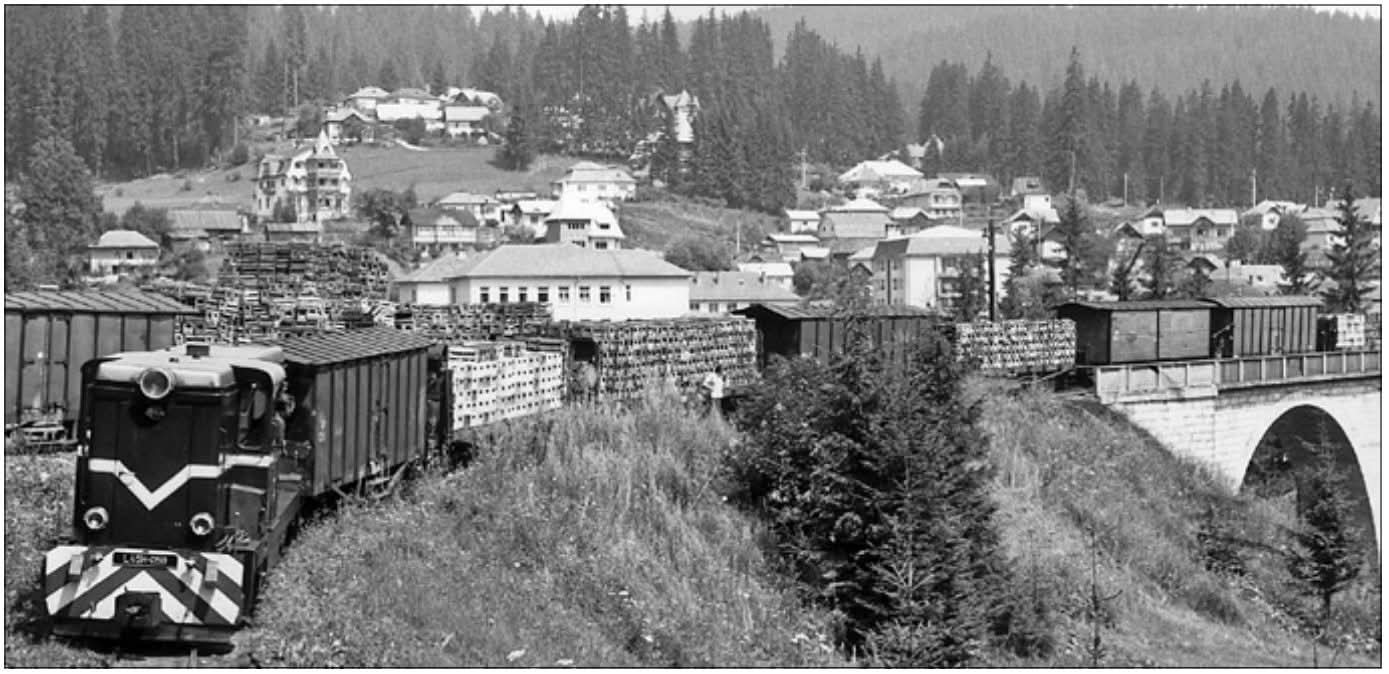
Between 1912 and 1914, the former Austro-Hungarian authorities built a forest railway between Toplița (lower) and Capu-Corbului (upper).
This line was extended in 1954 to the Borsec coal mine, and a branch line to the mineral water bottling plant was also constructed at that time. A buffer depot was built at the Toplița railway station for industrial goods transported from Borsec.
The 760 mm gauge railway line was 45.5 km long and was completed in 1951, when the Borsec viaduct was also built.
On May 16, 1989, the transshipment terminal at the Toplița station was inaugurated. The line had five locomotives (three diesel and two steam) until 1992, when rail transport ceased.
One of the rare colour video footage of a steam-locomotive driven train can be watched here.
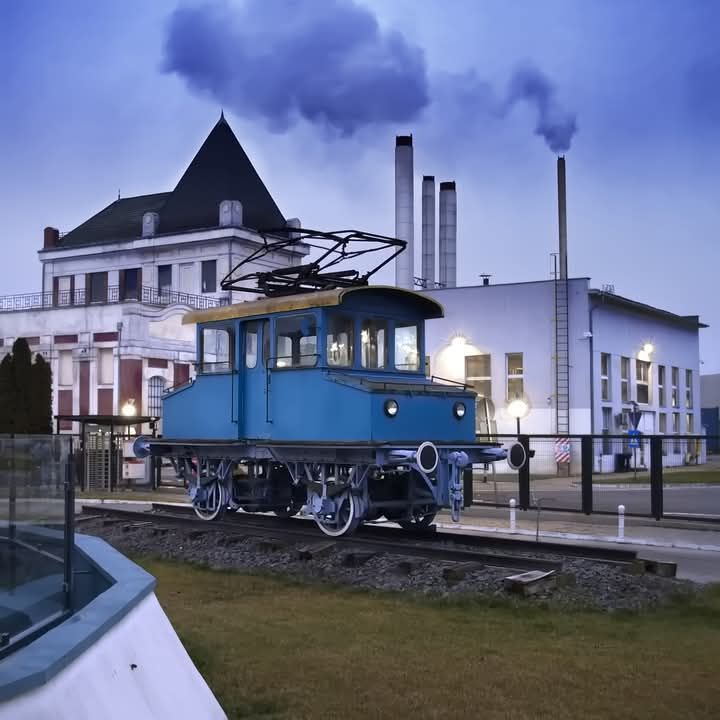
This is the last Muki tram-locomotive that pulled freight wagons through Timișoara, România. The gauge of the tram tracks in Timișoara is identical to that of the railways. They were designed after the First World War, at the BKVT plant in Budapest, so that factories could receive or send goods using the tram lines. It was displayed in the courtyard of the brewery in the city.
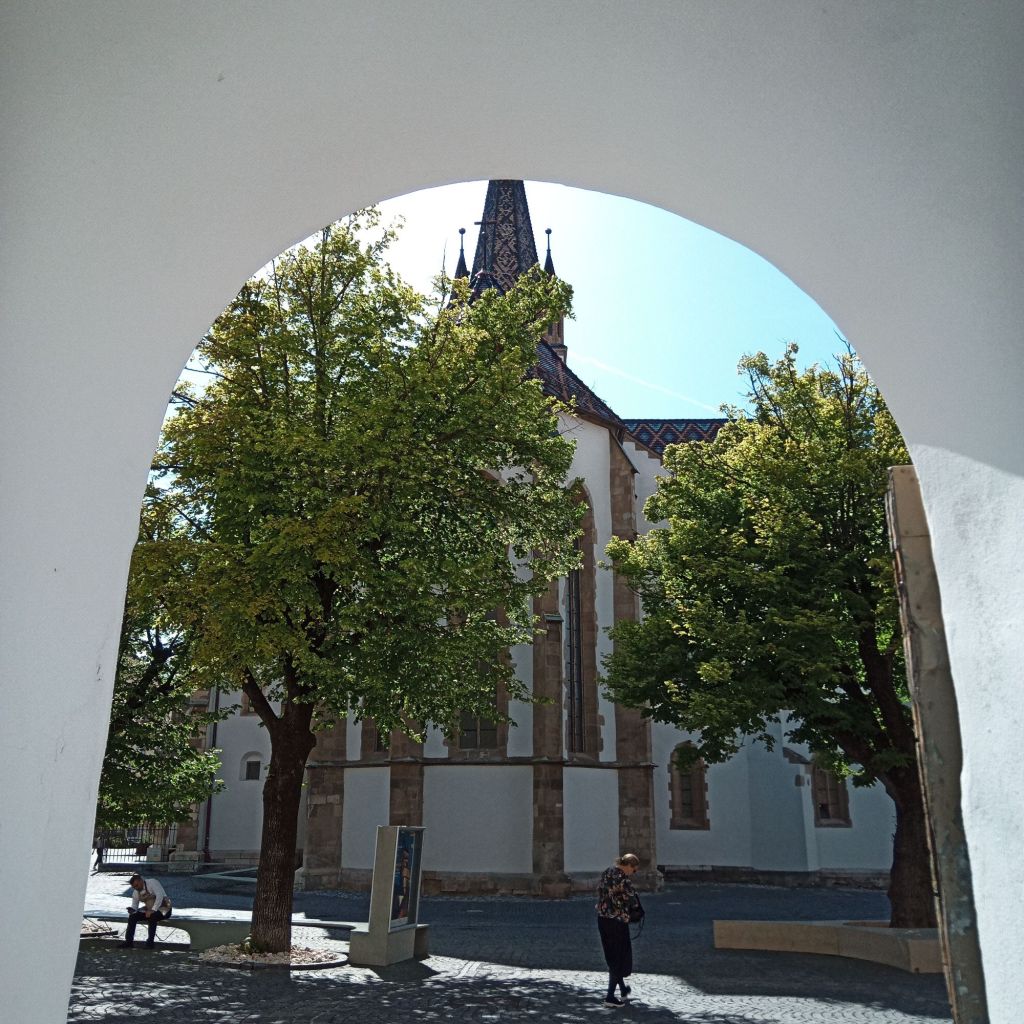
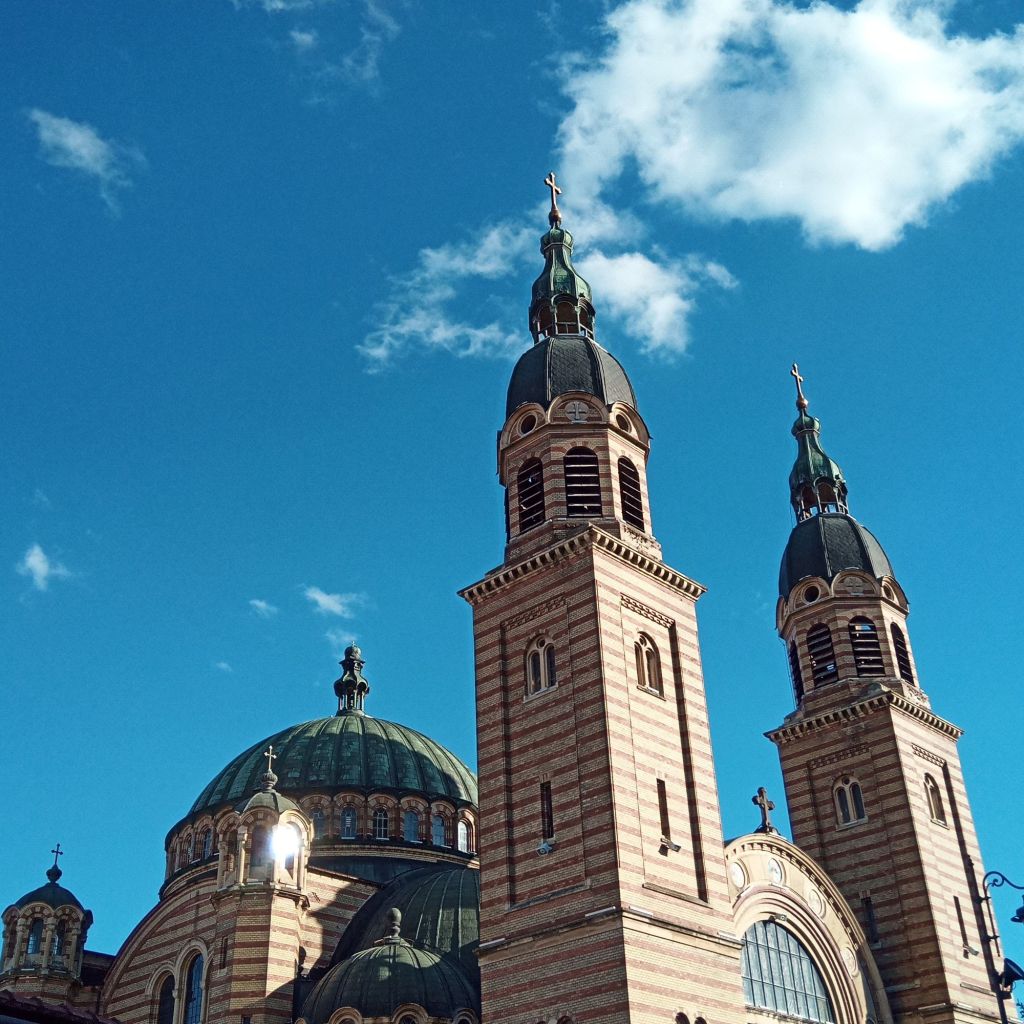
Mitropoliei Street in Sibiu / Hermannstadt is a peculiar street which hosts four churches: The „Holy Trinity” Orthodox Cathedral, The Reformed Church, The „Holy Trinity” Roman-Catholic Church (situated between Piata Mare and Piata Mica – Big Square and Small Square) and Saint Mary Lutheran Cathedral (situated in the Huet Square). Although the last two churches have different addresses, they are united by the same line of the Mitropoliei Street.
Piata Mica (Small Square) and Piata Huet (Huet Square) are linked by the shortcut of a passageway. In the photo below you can admire the Lutheran Cathedral seen from that passageway:
But let’s go back to the Mitropoliei Street, the headquarter of the Romanian Orthodox Metropolitan Seat of Transylvania. Its cathedral church was built in 1906 and was intended to be a smaller copy of the Byzantine Imperial Cathedral of Hagia Sophia, in Constantinople. And this, in compensation of the fact that, in order to build the nowadays cathedral, the Romanian Orthodox community had to demolish an older smaller Greek Orthodox church. In return, the two Orthodox communites got a copy of the Hagia Sophia Cathedral from Istanbul, the eternal nostalgia of the Greeks…
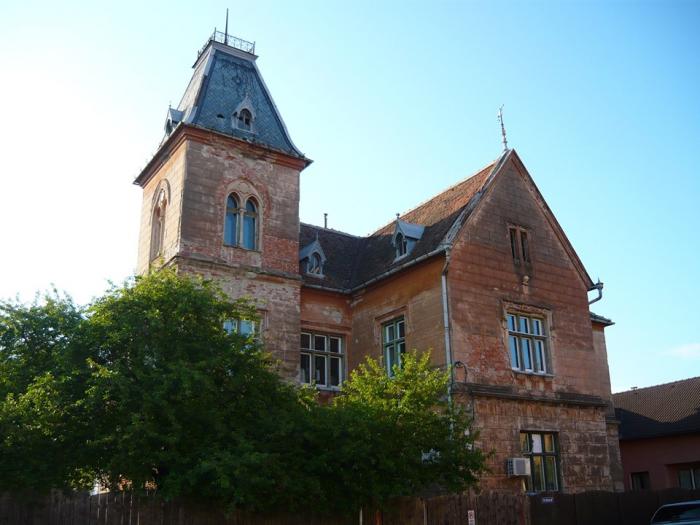
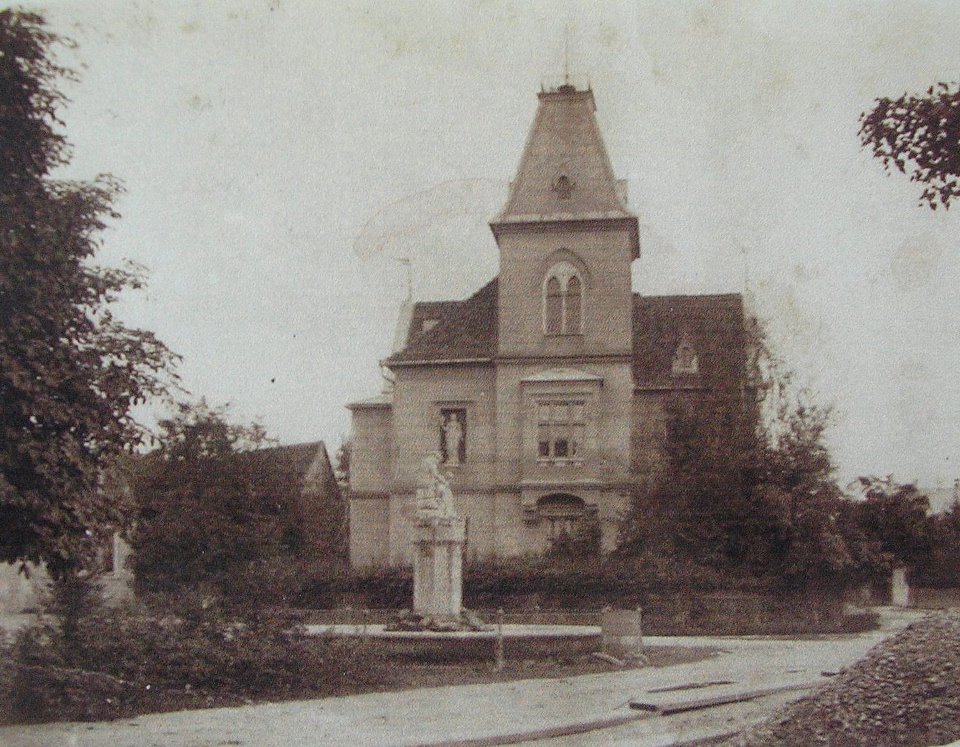
Let’s go for a walk in the old city of Sibiu (Hermannstadt), one of the ex-capitals of Transylvania and declared in 2007 European Capital of Culture! Villa Michaelis is a beautiful castle-like building situated near the city centre, in the Josephin neighbourhood. It was built around 1900 in the neogothic style. Nowadays, it can be found at the intersection between Dealului Street and Ion Rațiu Street.
In a niche of one of the building’s walls one can admire the statue of a young woman holding a mirror in her right hand. While some people say it is the representation of Hecate goddess with her magical mirror of secrets, others say it was carved in the likeness of a servant girl with whom the building owner allegedly had a child. As she lived in a house across the street, the mirror in the statue’s hand would reflect a beam of light into her window.
The origin of that statue remains a mystery to this day. I would call her the Transylvanian Juliet, a forever-young woman inspiring poets and story-tellers. If you want to write her a letter and maybe recieve an answer – even a love prediction – from her, you might consider sending an e-mail to the following address: romania.inima.mea@gmail.com
Perhaps an even more fascinating story is that of the fountain located between Villa Michaelis and the building where „Juliet” would have lived. Not surprisingly, in the middle of the fountain there is another statue of a woman giving water to her little boy. It is called „Mother and child” and some art critics believe it depicts the Virgin Mary with the infant Jesus, although the sculpture does not have the appearance of a religious statue. Could it be the representation of the same servant girl who gave birth to her master’s child? We don’t know, but it seems that it could be somehow connected to the other statue from Villa Michaelis.
The fountain was built from the initiative of the Magistrate of Sibiu and placed in 1905 in this square. It was placed near the northern slope of the citadel, near the Franciscan monastery. This square was created by withdrawing the right alignment of the street, while the other alignment was pushed towards the interior of the street, thus forcing the street to be diverted, remarks historian Răzvan Pop from Sibiu.
The body of the fountain consists of a flared basin, with the upper base made of stone and applied to the body of the basin. In the middle of this basin stands the statue of a woman dressed in Roman fashion with her child. The plinth of the statue is polygonal, in the shape of a fortress tower, the base of which is larger in volume than the body itself.
The woman is seated on a group of stones, the way the dress falls being the element that gives movement to the sculpture. Her dress is held in place only by a strap. The hairdo is in the same Roman style. She is holding in her left hand a cup from which the water gushes forth. The child is carved nude as a symbol of innocence.