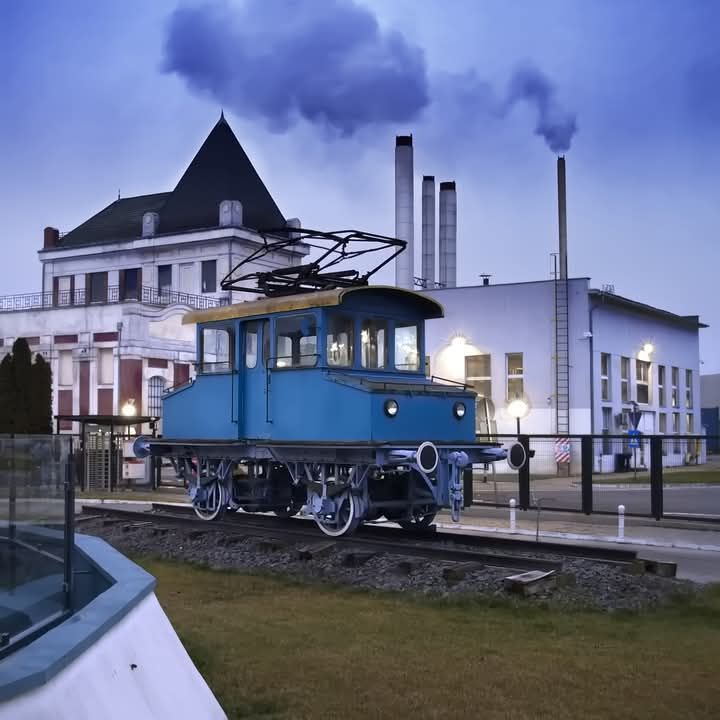
This is the last Muki tram-locomotive that pulled freight wagons through Timișoara, România. The gauge of the tram tracks in Timișoara is identical to that of the railways. They were designed after the First World War, at the BKVT plant in Budapest, so that factories could receive or send goods using the tram lines. It was displayed in the courtyard of the brewery in the city.
Mitropoliei Street in Sibiu / Hermannstadt is a peculiar street which hosts four churches: The „Holy Trinity” Orthodox Cathedral, The Reformed Church, The „Holy Trinity” Roman-Catholic Church (situated between Piata Mare and Piata Mica – Big Square and Small Square) and Saint Mary Lutheran Cathedral (situated in the Huet Square). Although the last two churches have different addresses, they are united by the same line of the Mitropoliei Street.
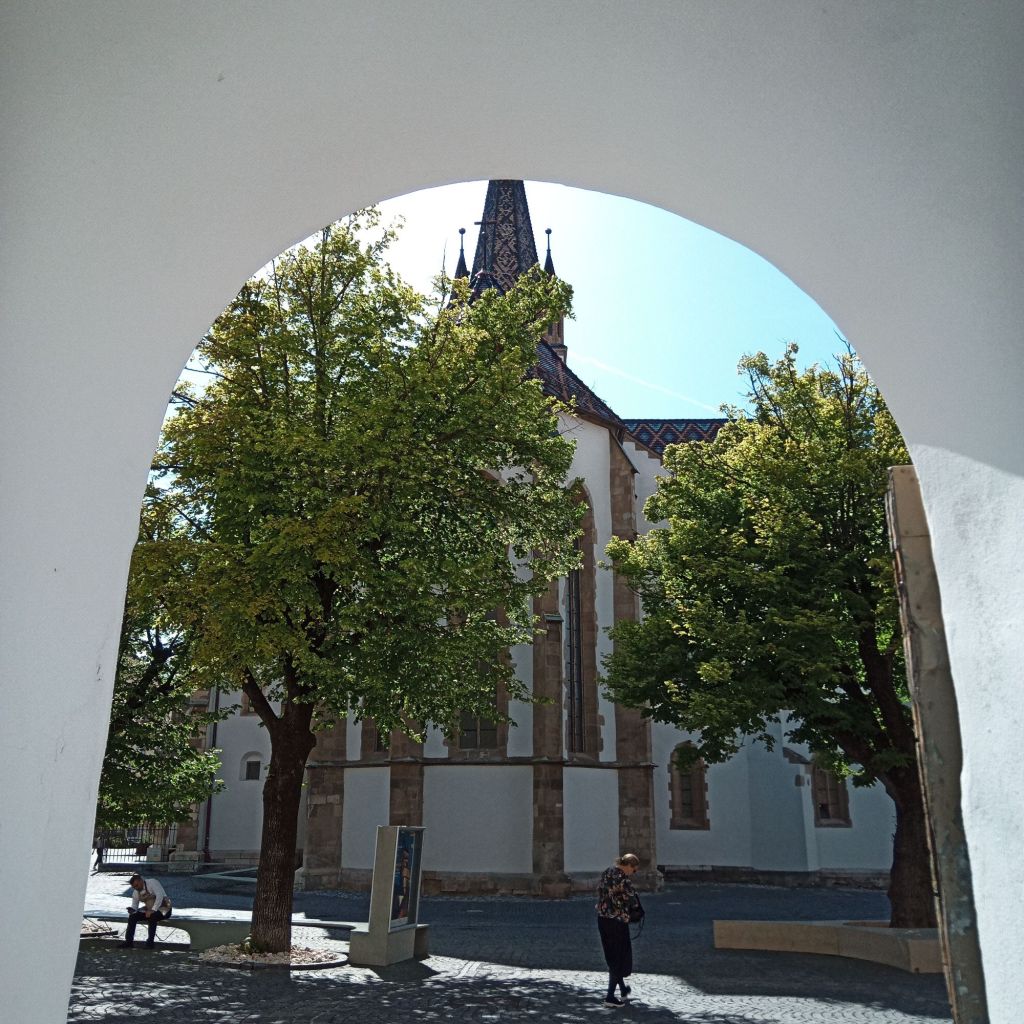
Piata Mica (Small Square) and Piata Huet (Huet Square) are linked by the shortcut of a passageway. In the photo below you can admire the Lutheran Cathedral seen from that passageway:
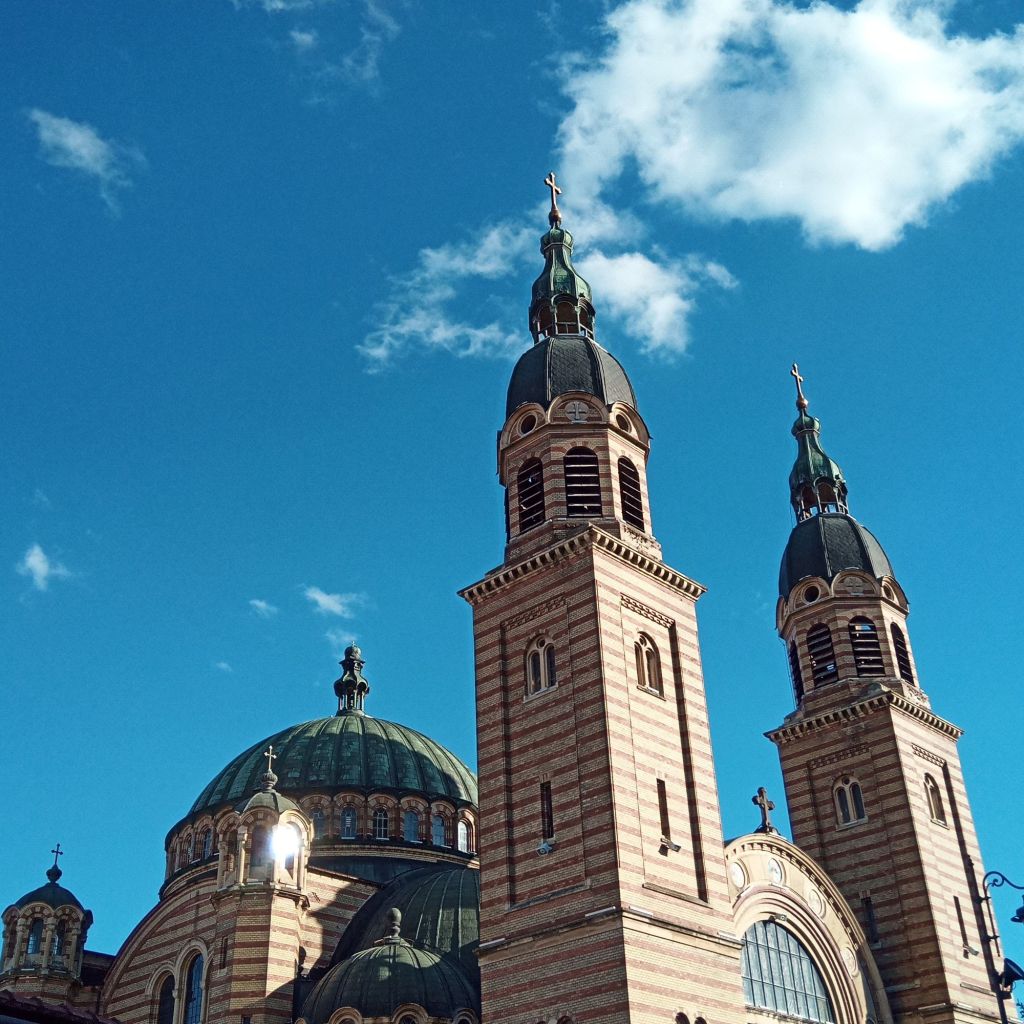
But let’s go back to the Mitropoliei Street, the headquarter of the Romanian Orthodox Metropolitan Seat of Transylvania. Its cathedral church was built in 1906 and was intended to be a smaller copy of the Byzantine Imperial Cathedral of Hagia Sophia, in Constantinople. And this, in compensation of the fact that, in order to build the nowadays cathedral, the Romanian Orthodox community had to demolish an older smaller Greek Orthodox church. In return, the two Orthodox communites got a copy of the Hagia Sophia Cathedral from Istanbul, the eternal nostalgia of the Greeks…
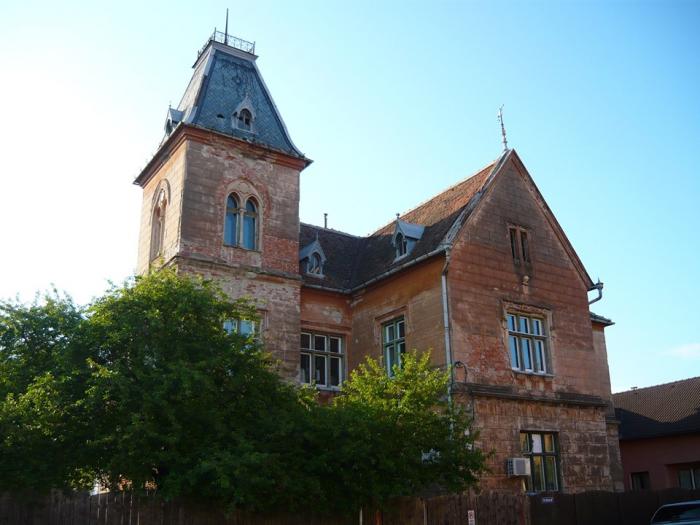
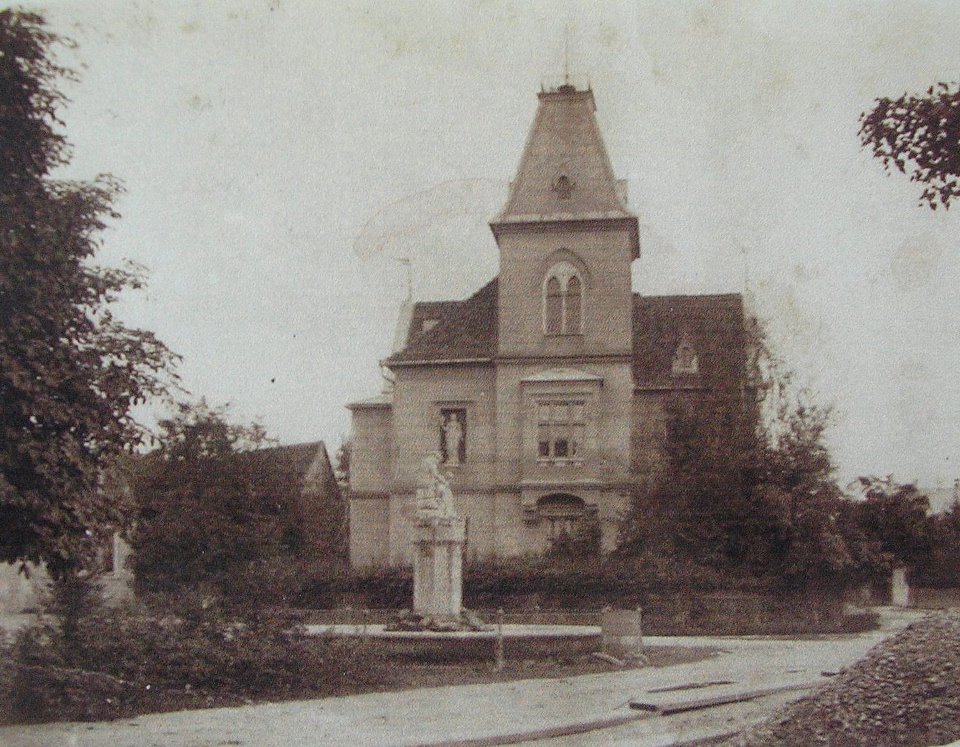
Let’s go for a walk in the old city of Sibiu (Hermannstadt), one of the ex-capitals of Transylvania and declared in 2007 European Capital of Culture! Villa Michaelis is a beautiful castle-like building situated near the city centre, in the Josephin neighbourhood. It was built around 1900 in the neogothic style. Nowadays, it can be found at the intersection between Dealului Street and Ion Rațiu Street.
In a niche of one of the building’s walls one can admire the statue of a young woman holding a mirror in her right hand. While some people say it is the representation of Hecate goddess with her magical mirror of secrets, others say it was carved in the likeness of a servant girl with whom the building owner allegedly had a child. As she lived in a house across the street, the mirror in the statue’s hand would reflect a beam of light into her window.
The origin of that statue remains a mystery to this day. I would call her the Transylvanian Juliet, a forever-young woman inspiring poets and story-tellers. If you want to write her a letter and maybe recieve an answer – even a love prediction – from her, you might consider sending an e-mail to the following address: romania.inima.mea@gmail.com
Perhaps an even more fascinating story is that of the fountain located between Villa Michaelis and the building where „Juliet” would have lived. Not surprisingly, in the middle of the fountain there is another statue of a woman giving water to her little boy. It is called „Mother and child” and some art critics believe it depicts the Virgin Mary with the infant Jesus, although the sculpture does not have the appearance of a religious statue. Could it be the representation of the same servant girl who gave birth to her master’s child? We don’t know, but it seems that it could be somehow connected to the other statue from Villa Michaelis.
The fountain was built from the initiative of the Magistrate of Sibiu and placed in 1905 in this square. It was placed near the northern slope of the citadel, near the Franciscan monastery. This square was created by withdrawing the right alignment of the street, while the other alignment was pushed towards the interior of the street, thus forcing the street to be diverted, remarks historian Răzvan Pop from Sibiu.
The body of the fountain consists of a flared basin, with the upper base made of stone and applied to the body of the basin. In the middle of this basin stands the statue of a woman dressed in Roman fashion with her child. The plinth of the statue is polygonal, in the shape of a fortress tower, the base of which is larger in volume than the body itself.
The woman is seated on a group of stones, the way the dress falls being the element that gives movement to the sculpture. Her dress is held in place only by a strap. The hairdo is in the same Roman style. She is holding in her left hand a cup from which the water gushes forth. The child is carved nude as a symbol of innocence.





 Transylvanity Fair