What’s the last movie that made you cry?
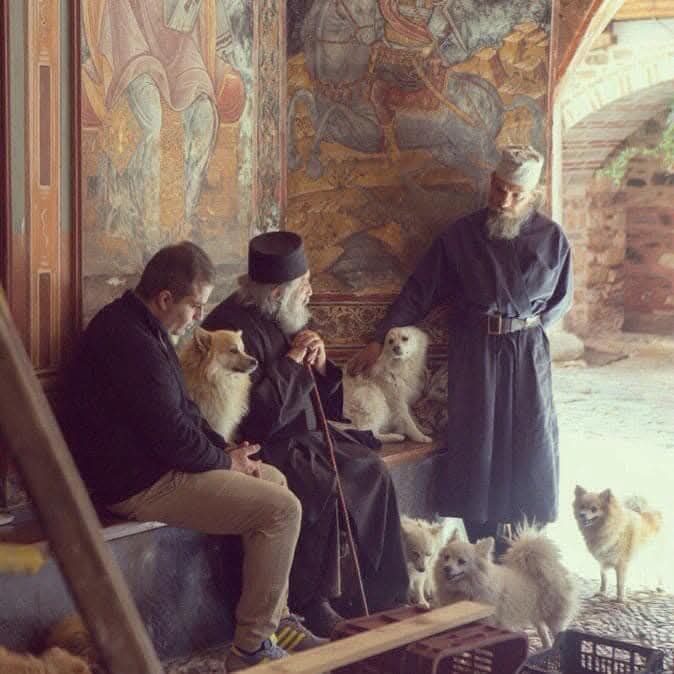
The most recent film I watched that made me cry is “Where Are You, Adam?” by Oleksandr Zaporoshchenko and Oleksandr Plyska, which was shown on a projection screen in my neighborhood’s church after Vespers. The film was produced in 2019, but was first shown in my city in 2025. The film was shot at the Dochiariou Monastery on Mount Athos, with its former abbot, Archimandrite Gregory Zoumis, as the central character.
In fact, the central focus is the Athonite way of life, and the film offers an excellent opportunity to see what life is like on the Holy Mountain—not only for those who have never been there or cannot go, but also for those who have visited and remain longing for this “island of the Mother of God” or “monastic republic”, as it is often called.
Over the course of the nearly two-hour screening, the film covers just about every aspect of life as a monk or pilgrim in an Athonite monastery: from religious services—including the tonsure ceremony and the celebration of the Holy Resurrection of our Lord Jesus Christ (Easter) —to the various tasks related to economic management and voluntary practical activities—”obbediences”: work in the kitchen and dining hall, masonry, fishing, agriculture, animal husbandry, and more. Some temptations or simmering conflicts are also sketched out, a sign that no matter how much they seek salvation, the brothers remain human, with their good and bad sides.
The film impresses with its tenderness, poetic and comprehensive approach, objectivity, and freedom: it does not impose a single perspective on what is presented, but rather gives each viewer the opportunity to understand and take away the part that impressed them most, the part that resonated most deeply with their inner self. So many viewers, so many ways of understanding! That is why, at the end, a discussion took place with at least one of the film’s producers, as well as with the priest(s) of the host parish.
Below is some information about this film, provided by Ukrainian Deacon Oleksandr Plyska:
“THE FILM’S SUBJECT
The film “Where Are You, Adam?” was shot on Mount Athos, at the Dochiariou Monastery, during the lifetime of and with the blessing of the late Hegumen, Archimandrite Gregory Zoumis.
The film offers a delicate observation of the monks’ daily lives, their inner world, and their remarkable way of life in a unique place where time is not measured by the hour.
We see people deeply immersed in prayer, work, trials, countless hardships, and suffering.
The images of self-denial and monastic altruism leave no one indifferent, and thus the viewer embarks on their own journey in search of answers to profound personal questions, such as, “Where is my heart?” “Where am I?”, at the root of which lies the fundamental question addressed to all humanity: “Where are you, Adam?”.
To a certain extent, the film proves to be a hymn to the Christian faith, Orthodoxy, and monasticism, glorifying holiness—a state that, ultimately, can be attained by those who diligently seek it.
WHAT MAKES THIS FILM UNIQUE?
This is a historical documentary; it contains no role-playing, no pre-written scripts, no rehearsed lines, and no preconceived situations, nor is there a “voice-over.” The narrative unfolded naturally, like a mosaic composed of the lives of the film’s protagonists.
The film contains neither glorification nor propaganda. It offers every viewer the freedom to interpret it as they see fit, regardless of their religious, denominational, ethical, or political views.
The filmmakers do not insist on imposing any idea or opinion; instead, they present the monks’ way of life and the life of the monastery in all their depth and splendor, while the viewer simply lives through their own experience. As they immerse themselves in the film’s atmosphere, embraced by sincere and compassionate empathy, viewers unwittingly become not only witnesses but also participants in the events, thereby carrying out a laborious yet deeply meaningful work within the depths of their own hearts.
INFORMATION ABOUT THE FILM’S SCREENINGS
In Romania, the premiere of the film “Where Are You, Adam?” took place in September 2023 at the Romanian Orthodox Patriarchate Palace in Bucharest. The film was screened in major cities and towns across Romania, as well as in Romanian Orthodox parishes in Germany, France, the United Kingdom, Denmark, Sweden, Spain, and the Netherlands.
Participation in Film Festivals
The film was selected and screened at two “A”-category film festivals accredited by FIAPF.
•The Kraków Film Festival in Poland, which is also the oldest documentary film festival in Europe.
•The Tallinn Film Festival, also known as the Tallinn Black Nights Film Festival (Estonia).
The film “Where Are You, Adam?” won awards at the following film festivals.
•The “POKROV” Film Festival in Kyiv, Ukraine, where it received the Grand Prix.
•The Zaicear Christian Culture Festival in Serbia, where it received the Grand Prix.
•GIFFT of Canada, The International Greek Film Festival, where it received the Best Documentary Film Award.
RO
Cel mai recent film pe care l-am vizionat și care m-a făcut să plâng este „Adame, unde ești?” de Alexandru Zaporoșenco și Alexandru Plîșca, rulat pe un ecran de proiecție în biserică, după vecernie. Filmul a fost produs în 2019, dar a fost proiectat la mine în oraș abia în 2025. Pelicula a fost turnată la Mănăstirea Dohiariu din Muntele Athos, avându-l ca personaj central pe fostul stareț al acesteia, Arhimandritul Grigorie Zoumis.
De fapt, personajul central este modul de viețuire athonită și filmul e un excelent prilej de a vedea cum se trăiește în Sfântul Munte pentru cine nu a fost niciodată acolo sau nu poate să meargă, dar și pentru cei care au făcut-o și au rămas cu dorul după această „insulă a Maicii Domnului” sau „republică monahală”, așa cum este adesea numit.
Pe parcursul celor aproape două ore cât durează proiecția, sunt abordate cam toate aspectele viețuirii de călugăr sau de pelerin într-o mănăstire athonită: de la slujbele religioase – inclusiv cea a tunderii în monahism sau cea a Sfintelor Paști – și până la feluritele ocupații ce țin de organizarea economică și de activități practice voluntare – „ascultări”: munca la bucătărie și sala de mese, zidăria, pescuitul, agricultura, creșterea animalelor și nu numai. Apar schițate și unele ispite sau conflicte mocnite, semn că indiferent cât de mult ar căuta mântuirea, frații rămân tot oameni, cu bune și cu rele.
Filmul impresionează prin tandrețe, abordare poetică și exhaustivă, obiectivitate și libertate: nu impune o viziune unică asupra celor prezentate, ci lasă fiecărui privitor ocazia să înțeleagă și să ia cu el acea parte care l-a impresionat mai mult, care a rezonat cel mai bine cu sinele său lăuntric. Câți privitori, atâtea maniere de înțelegere! Motiv pentru care, la final, s-a purtat o discuție cu cel puțin unul dintre producătorii filmului, precum și cu preoții parohiei–gazdă.
Redăm, mai jos, câteva informații despre această peliculă, puse la dispoziție de diaconul ucrainean Alexandru Plîșca (Oleksandr Plyska):
„SUBIECTUL FILMULUI
Filmarea peliculei „Unde ești, Adame?” a fost realizată în Sfântul Munte Atos, la Mănăstirea Dochiariu, în timpul vieții și cu binecuvântarea regretatului Egumen, Arhimandritul Grigorie Zoumis.
Filmul se arată a fi o observare delicată a vieții de zi cu zi a monahilor, a lumii lor interioare și a viețuirii uimitoare într-un loc unic, unde timpul nu are drept unitate de măsură ora.
Vedem oameni care sunt aprofundați în rugăciune, muncă, încercări, greutăți nenumărate și dureri.
Imaginile lepădării de sine și ale altruismului monahal nu lasă pe nimeni indiferent și, astfel, spectatorul parcurge calea proprie în căutarea răspunsurilor la profunde căutări personale, cum ar fi de pildă, „oare unde se găsește inima mea?”, „unde mă aflu eu?”, la baza cărora stă întrebarea fundamentală, adresată întregii omeniri: „Unde ești, Adame?”.
Într-o oarecare măsură, filmul se arată a fi un imn înălțat Credinței creștine, Ortodoxiei și monahismului, slăvind sfințenia, stare care într-un final, poate fi dobândită de către cei ce se sârguiesc în căutarea ei.
ÎN CE CONSTĂ UNICITATEA ACESTUI FILM?
Acesta este un document istoric, el nu conține jocuri de roluri și scenarii scrise din timp, replici și situații gândite în prealabil, nefiind prezentă „vocea din spatele ecranului”. Scenariul s-a așezat într-un mod firesc, precum un mozaic compus din viețile eroilor filmului.
În film nu este prezentă nici exaltarea, nici propaganda. Pelicula oferă fiecărui spectator libertatea de percepție, indiferent de opiniile legate de apartenența sa religioasă, confesională, etică sau politică.
Autorii nu insistă să impună nicio idee sau opinie, aici fiind prezentată viețuirea monahilor și viața mănăstirii în toată profunzimea și splendoarea lor, în timp ce spectatorul își trăiește doar propria experiență. Scufundându-se in atmosfera filmului, îmbrățișați fiind de o empatie sinceră și plină de compasiune, spectatorii devin involuntar nu doar martori, ci și participanți la evenimente, înfăptuind astfel o lucrare trudnică de mare folos în adâncul propriilor inimi.
INFORMAȚII DESPRE PROIECȚIILE FILMULUI
În Romania, premiera filmului „Unde ești, Adame?” a avut loc în septembrie 2023, la Palatul Patriarhal. Filmul a fost proiectat atât în marile orașe și în localități din România, cât și în parohiile românești din Germania, Franța, Marea Britanie, Danemarca, Suedia, Spania și Olanda.
Participarea la festivaluri de film
Filmul a fost selectat și proiectat în cadrul a două festivaluri de film de categoria „A”, acreditate de FIAPF.
•Festivalul de film din Cracovia, Polonia, care este și ce mai vechi festival de film documentar din Europa.
•Festivalul de film din Tallinn, Estonia, numit și Tallinn Black Nights Film Festival.
Filmul ” Unde ești, Adame?” a obținut premii la următoarele festivaluri de film.
•Festivalul de film „POKROV”, Kiev, Ucraina, unde a primit Grand-Prix.
•Festivalul culturii creștine Zaicear, Serbia, unde a primit Grand-Prix.
•GIFFT of Canada, Festivalul internațional de film grecesc, unde a primit Premiul pentru cel mai bun film documentar.