What’s a moment when a stranger completely restored your faith in people?
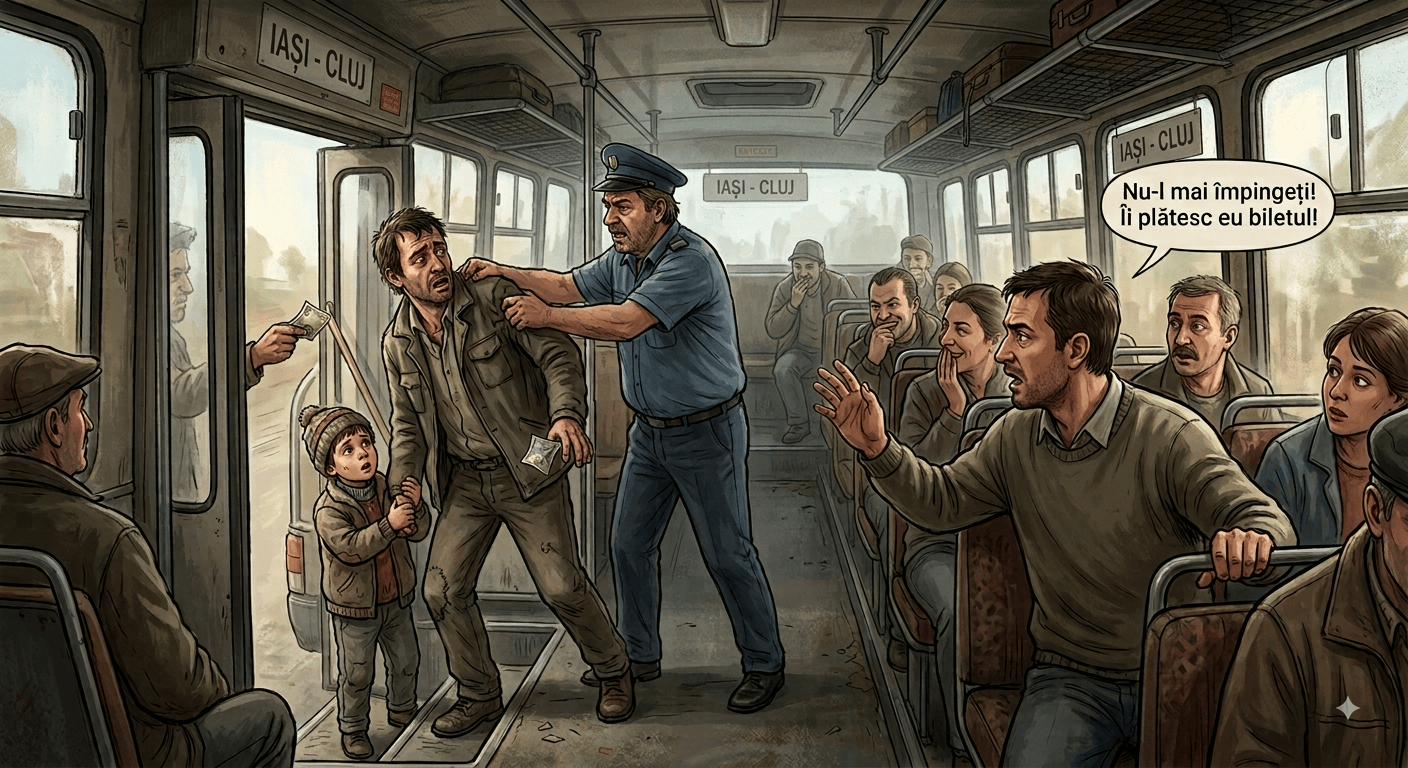
I was traveling back to Transylvania from Moldavia by bus, and at a stop along the way, a poor man got on, accompanied by a child. When the driver came down the aisle to collect fare from the new passengers, the poor man tried to bribe the driver—that is, to convince him to accept a smaller amount of money, which the driver could pocket, in exchange for waiving the fare. The poor man’s child, who was under 5 years old, would have been eligible to ride for free. The driver refused the bribe and began pushing the poor man toward the bus’s exit door, while the man insisted he had no more money than what he had already given the driver. During this scene, the other passengers—who could have pooled their money, each contributing a small amount to cover the full cost of a ticket—were making jokes at the poor man’s expense and didn’t care that the child was listening, exposed to his father’s public humiliation. At the last moment, a random man called out to the driver: “Stop pushing the poor man around—I’ll pay for his ticket!” Later, upon receiving effusive thanks, the benefactor did not boast about his deed, but explained that, in the course of his travels, he had earned an amount of money equivalent to the poor man’s fare and that it seemed immoral to him to keep the surplus in his wallet, while a person in need was being “robbed blind” for that same amount. So he chose to use the money he had personally earned to benefit the community.
RO
Călătoream înapoi spre Transilvania din Moldova cu autocarul și, la o stație de pe parcurs, s-a urcat un om sărac, care avea și un copil cu el. Când șoferul a venit pe culoar să ceară banii de bilet călătorilor nou-urcați, săracul a încercat să îl mituiască pe șofer, adică să îl convingă să îi dea o sumă mai mică de bani pe care să o bage în propriul buzunar pentru a-l ierta de prețul biletului. Copilul săracului, fiind în vârstă de până în 5 ani, ar fi beneficiat de gratuitate. Șoferul nu a acceptat mita și a început să îl împingă pe sărac spre ușa de ieșire din autocar, în timp ce bărbatul susținea că nu are mai mulți bani decât îi dăduse conducătorului auto. În timpul acestei scene, ceilalți călători, care ar fi putut face chetă să dea fiecare o sumă infimă de bani și să strângă în total costul unui bilet întreg, făceau glume pe seama săracului și nu se sinchiseau de faptul că și copilul le auzea, fiind expus la umilirea publică a tatălui său. În ultima clipă, un bărbat oarecare i-a strigat șoferului: „Nu-l mai împingeți pe bietul om, lăsați că îi voi plăti eu biletul!”. Mai târziu, primind mulțumiri elogioase, sponsorul nu s-a mândrit cu fapta lui, ci a argumentat că, în drumurile sale, câștigase o sumă de bani echivalentă cu prețul biletului săracului și că i s-a părut imoral ca el să stea cu surplusul în portofel, în timp ce unui nevoiaș i se „scoteau ochii” pentru exact aceeași sumă. Așa că a ales să valorifice banii câștigați personal întru atingerea unui beneficiu comunitar.

